I Doubt It?

Materials
Deck of cards

cards.jpg
Instructions
1. In this game the objective is to be the first to discard all of your cards. The person who goes first must discard his aces face down, the second two’s, third, three’s… through king’s. As the person places the cards down they must announce the quantity of cards being played (i.e. 2 aces, 1 two, 3 threes, etc.) If a person doesn’t have a card of the value he/ she is supposed to play, then he/ she bluffs. A person may also bluff at any time by including additional cards of another value in with the cards of the correct value they are playing. For example a person may only have two aces, but includes a six and calls out “three aces.”
2. At any time a player may shout “I doubt it.” The person that just played cards must turn them over and reveal them. If the revealed cards were a bluff and not 100% what they were claimed to be, the player picks up the entire discard pile. If he/ she was telling the truth, then the person who yelled “I doubt it” must pick up the entire discard pile.
3. The game continues until one player runs out of cards.

Discussion
1. What is the primary objective of this game? What are some of our objectives in life? What does winning mean to you?
2. What type of person is best at this game? Did anyone in this game get a reputation for dishonesty or for integrity? What reputation do you have with others? How did you get that reputation?
3. What elements of this game caused you to lie, misrepresent the truth, or stretch the truth? What things tempt you be less than honest in real life? What things tempt you to act against your normal character?
4. Are you known for your honesty, for your integrity? What actions in life build / destroy a persons character / reputation? Why is a good reputation important? How does our reputation affect our testimony?
5. Is TRUTH flexible? Why or why not? Is there such a thing as absolute truth? Why or why not?

Application
1. Stretching the TRUTH: How often in life do we try to gain benefit by either stretching the truth or by an outright lie. How many times do we sacrifice honesty and integrity to get ahead of others in the game of life. While in this game we might get away with it, Scripture tells us that a final judgement awaits us all and everything will be revealed. Are you ready for Judgement Day.
2. DOUBTS: All of us have doubts about God at one time or another, but that doesn’t mean we give up. We make choices the best we can not knowing what the next card in life holds for us. But we do know that God never bluffs. He always is true. And he wants us to be victorious, not in a card game but in life.

Get Icebreakers ebookIcebreakers Ahead: Take It To the Next Level

This 170 page resource not only provides 52 of the world’s most popular group icebreaker activities and games, but also includes lesson ideas and discussion questions to smoothly transition into conversations about the issues common to most groups.

Click here to find out how to get your hands on this incredible resource!
The Other Side

A sick man turned to his doctor, as he was preparing to leave the examination room and said, “Doctor, I am afraid to die. Tell me what lies on the other side.”

Very quietly, the doctor said, “I don’t know.”

“You don’t know? You, a Christian man, do not know what is on the other side?”

The doctor was holding the handle of the door; on the other side of which came a sound of scratching and whining, and as he opened the door a dog sprang into the room and leaped on him with an eager show of gladness.

Turning to the patient, the doctor said, “Did you notice my dog? He’s never been in this room before. He didn’t know what was inside. He knew nothing except that his master was here, and when the door opened, he sprang in without fear. I know little of what is on the other side of death, but I do know one thing, I know my Master is there and that is enough.”

– Author Unknown


MORE IDEAS? See “Creative Object Lessons”

200 page e-book that explains everything you need to know when planning your very own object lessons. It contains 90 fully developed object lesson ideas and another 200 object lesson starter ideas based on Biblical idioms and Names / Descriptions of God.

Learn More…

Questions with Purpose

Things to consider when creating questions for Discussion

The best teachers:
1) have the greatest knowledge of the material,
2) have the strongest feelings concerning its importance, and
3) are the ones who are most consistently applying it to their lives.

By influencing thinking and feelings towards issues and Biblical Teaching you have a long-lasting impact on actions. You can directly influence actions, but it will be only temporary unless you also influence thinking and feelings.

You should have questions that fall into EACH of the THREE of the following areas:

1. To know – an appeal to intellect, knowledge
* What do you want them to understand more clearly? (This is usually as far as most groups get, but the next two elements are equally important.)

2. To feel – an appeal to emotion
* How do you want the group to feel? Challenged? Loved? Secure? Excited? This personalizes the input. They can study the cold facts and achieve the “knowledge” goal. But it takes the Holy Spirit using your effective introduction and the kinds of questions you ask to make them personally feel the truth as applied to them. Only when the heart is added to the thinking does real lasting change take place.

3. To do – an appeal for action
* What do you want them to specifically do as a result of this time? You motivate them to accomlish this goal through the conclusion and application time. This is the weakest part of most lessons. Often the application is either not planned or pushed out due to lack of time.

The best test of the effectiveness of your teaching is not what you do, but what your students do as a result of your teaching and how they apply the knowledge gained.

Parable of the Pencil

The Parable of the Pencil – Part 1

The Pencil Maker took the pencil aside, just before putting him into the box. “There are 5 things you need to know,” he told the pencil, “Before I send you out into the world. Always remember them and never forget, and you will become the best pencil you can be.”
pencil.jpg
1. You will be able to do many great things, but only if you allow yourself to be held in Someone’s hand.
2. You will experience a painful sharpening from time to time, but you’ll need it to become a better pencil.
3. You will be able to correct any mistakes you might make.
4. The most important part of you will always be what’s inside.
5. On every surface you are used on, you must leave your mark. No matter what the condition you must continue to write.”

The pencil understood and promised to remember, and went into the box with purpose in his heart.

The Parable of the Pencil – Part 2

But now the pencil lay on the dark wood table, feeling insignificant and rather sad. Beside him on the desk was a colourful tin can, filled with every kind of beautiful pen to be had. There were silver fountain pens and a neon felt tip marker. There was also a classy ballpoint whom everyone called Parker.

“What a loser,” they said of the pencil, as they observed his wooden frame.

“Don’t bother with him, he’s a nobody,” said Parker, “He doesn’t even have a name.”

Now the world was at war and their owner was a Soldier who was tasked to bring peace to the land. “What we need is a map,” the Soldier had said, at the desk across from his Officer the other night. “If someone can fly me over the city unseen, I can draw a map from the sky. The map will tell you where to go and how to win, and soon we’ll put an end to this fight.” The Officer had agreed and now the Soldier would fly, but first he discussed with his wife. “I’ll need something to draw with, something dependable… something that won’t fail me mid-flight.”

The Soldier looked at his dark wood desk, and observed all the pens in the can. He studied each one, their bodies all shimmering, and he weighed them all in his hand. “This one won’t work,” he said of a pen, “the ink might blot on the map. This one needs to be refilled every few hours, and this one will dry out without a cap.” He looked at each one and always found something wrong, or anticipated problems if he used it in the sky. “I need something that would work whatever the conditions, and I need it soon my dear wife.”

“Then take this pencil.” his wife finally said, handing him the frail and battered yellow thing. “It will write no matter what, it will write on a plane – it’s the best writing tool you can bring.”

The Soldier smiled, kept the pencil in his pocket, and took it with him on the plane. He finished the map and the map helped bring them peace… and the pencil has never been the same.

The Parable of the Pencil – Part 3

The pencil was now nothing more than a stub; what was left of his lead was now broken. His eraser was gone, his wood frame had split, and some time ago his metal ring had been stolen.

Now he stood before the Pencil Maker, and waited for him to say those 5 words.

“Well done, my faithful pencil,” the Pencil Maker said, “You have written what you were meant to write in the world.”

– Author Unknown


MORE IDEAS? See “Creative Object Lessons”

200 page e-book that explains everything you need to know when planning your very own object lessons. It contains 90 fully developed object lesson ideas and another 200 object lesson starter ideas based on Biblical idioms and Names / Descriptions of God.

Learn More…

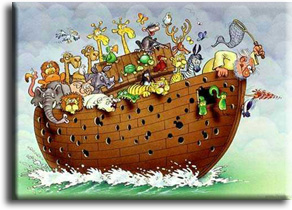
Everything I need to know about life, I learned from Noah’s Ark

1. Don’t miss the boat.
2. Remember that we are all in the same boat.
3. Plan ahead. It wasn’t raining when Noah built the Ark.
4. Stay fit. When you’re 600 years old, someone may ask you to do something really big.
5. Don’t listen to critics; just get on with the job that needs to be done.
6. Build your future on high ground.
7. For safety’s sake, travel in pairs.
8. Speed isn’t always an advantage. The snails were on board with the cheetahs.
9. When you’re stressed, float a while.
10. Remember, the Ark was built by amateurs; the Titanic by professionals.
11. No matter the storm, when you are with God, there’s always a rainbow waiting.

noah.jpg


MORE IDEAS? See “Creative Object Lessons”

200 page e-book that explains everything you need to know when planning your very own object lessons. It contains 90 fully developed object lesson ideas and another 200 object lesson starter ideas based on Biblical idioms and Names / Descriptions of God.

Learn More…

Not Always What It Seems

Two traveling angels stopped to spend the night in the home of a wealthy family. The family was rude and refused to let the angels stay in the mansion’s guest room. Instead the angels were given a small space in the cold basement. As they made their bed on the hard floor, the older angel saw a hole in the wall and repaired it. When the younger angel asked why, the older angel replied, “Things aren’t always what they seem.”

The next night the pair came to rest at the house of a very poor, but very hospitable farmer and his wife. After sharing what little food they had the couple let the angels sleep in their bed where they could have a good night’s rest. When the sun came up the next morning the angels found the farmer and his wife in tears. Their only cow, whose milk had been their sole income, lay dead in the field.

The younger angel was infuriated and asked the older angel how could you have let this happen? The first man had everything, yet you helped him, she accused. The second family had little but was willing to share everything, and you let the cow die. “Things aren’t always what they seem,” the older angel replied. “When we stayed in the basement of the mansion, I noticed there was gold stored in that hole in the wall. Since the owner was so obsessed with greed and unwilling to share his good fortune, I sealed the wall so he wouldn’t find it.” “Then last night as we slept in the farmers bed, the angel of death came for his wife. I gave him the cow instead.

Things aren’t always what they seem.”

– Author Unknown


MORE IDEAS? See “Creative Object Lessons”

200 page e-book that explains everything you need to know when planning your very own object lessons. It contains 90 fully developed object lesson ideas and another 200 object lesson starter ideas based on Biblical idioms and Names / Descriptions of God.

Learn More…

How do I measure?

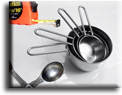
measure.jpgMaterials
A variety of tools used to measure things… a scale, ruler, measuring cups and spoons of all different sizes, thermometer, carpenter’s level, plumbline, voltage detector, protractor, stop watch, spring scale, watch or clock, etc.

Activity
Q: What do all these things have in common?
A: They are used to measure things.
Q: What would be the best device to measure a _____________. (Fill in the blank with various objects around the room)

Application
How do we measure our Christian growth?
How do we measure our spirituality?

We could measure our growth and spirituality by many different means. We could use the 10 Commandments, the Fruits of the Spirit, the Great Commission and many other ways to measure our spiritual life. This could be used as an introduction to any of these topics. But Christ said that the primary way we will be known / measured as Christians in by our love for others. (John 13:35)


MORE IDEAS? See “Creative Object Lessons”
200 page e-book that explains everything you need to know when planning your very own object lessons. It contains 90 fully developed object lesson ideas and another 200 object lesson starter ideas based on Biblical idioms and Names / Descriptions of God.
Learn More…

Claimed for God

A young medical student studied at the London Hospital. Robert Morrison and William Milne had gained a foothold in China for missionary work. Should he go and join them? He wrote in his journal “I knew God was speaking. I knew evangelists would be given and their support secured, but there unbelief came in. Suppose the workers are given and go to China: trials will come; their faith may fail; would they not reproach you for bringing them into such a plight?”

“I did not see that the Power that would give the men and the means would be sufficient to keep them also, even in the interior of China.

“A million a month were dying in China without God. This was burned into my very soul.”

Sunday, June 25th, 1865, he left the church meeting and went to a near by beach and walked most of the afternoon. Then he went back to his room that night and wrote these words:

“I was unable to bear the sight of a congregation of a thousand or more Christian people rejoicing in their own security while millions were perishing for the lack of knowledge. I wondered out on the sands alone and in great spiritual agony there the Lord finally conquered my unbelief. I surrendered myself to God for His service. I told Him that all the responsibilities as to the issues as to the consequences must rest with Him. That as His servant it was mine to obey and to follow Him. It was His to direct, to care for, to guide me, in all those who would labor with me. Needless to say, peace then flooded my soul. ”

He then prayed that God would give him 24 people to join him. Two for each of the eleven provinces of China that had no Gospel witness and two extras for Mongolia.

The young medical doctor was J. Hudson Taylor. From that church meeting J. Hudson Taylor claimed China for God.

J Hudson Taylor became the most widely used missionary in China’s history. During his 51 years of service there, his China Inland Mission established 20 mission stations, brought 849 missionaries to the field (968 by 1911), trained some 700 Chinese workers, raised four million dollars by faith, and developed a witnessing Chinese church of 125,000. It has been said at least 35,000 were his own converts and that he baptized some 50,000.

All this because he surrendered his will to God, to follow Him in obedience, to be used by Him.


MORE IDEAS? See “Creative Object Lessons”

200 page e-book that explains everything you need to know when planning your very own object lessons. It contains 90 fully developed object lesson ideas and another 200 object lesson starter ideas based on Biblical idioms and Names / Descriptions of God.

Learn More…

Sand & Stone

A story tells that two friends were walking through the desert. During some point of the journey they had an argument, and one friend slapped the other one in the face. The one who got slapped was hurt, but without saying anything, wrote in the sand: “TODAY MY BEST FRIEND SLAPPED ME IN THE FACE.”

They kept on walking until they found an oasis, where they decided to take a bath. The one who had been slapped got stuck in the mire and started drowning, but the friend saved him. After he recovered from the near drowning, he wrote on a stone: “TODAY MY BEST FRIEND SAVED MY LIFE.”

The friend who had slapped and saved his best friend asked him, “After I hurt you, you wrote in the sand and now, you write on a stone, why?” The other friend replied: “When someone hurts us we should write it down in sand where winds of forgiveness can erase it away. But, when someone does something good for us, we must engrave it in stone where no wind can ever erase it.”

Author Unknown


MORE IDEAS? See “Creative Object Lessons”

200 page e-book that explains everything you need to know when planning your very own object lessons. It contains 90 fully developed object lesson ideas and another 200 object lesson starter ideas based on Biblical idioms and Names / Descriptions of God.

Learn More…