Easter Egg Nose Roll

easter_egg1.jpgMaterials
Dyed Easter eggs for each person

Game objective
Roll the Easter Egg to the finish line using only your nose.

Game Play
1. Youth must get down on their hands and knees and roll the egg across the floor using only their
noses.
2. The first one to the finish line without touching the egg with their hands is the grand champion nose roller.

Variation
Raw eggs do not roll as easily as Hard boiled eggs

Messy Fun
Some Easter Egg dyes have a tendency to rub off. You might have colored noses when you have finished!

Get Creative Youth Ideas: "Easter Collection" ebook Easter Collection
Games and Activities in celebration of Easter.

Get more than 80 creative ideas for planning a Youth Easter celebration or Easter Party. You can immediately download my best Easter Icebreakers, games, illustrations, Easter activity ideas AND MUCH MORE in a useful ebook!

=> Tell me more about the Easter Collection

Easter Charades

Activity
Choose several events from the Easter story to be acted out by participants. Using these scenes, play a
game of charades.

Variation
Have participants re-enact the scenes in friezes–or stop-action scenes.

camera.jpg
Variation
Have the participants set up the scenes in the order that they happened. Take pictures of each pose.

List of events and scripture references

  • Jesus and the twelve disciples come into Jerusalem from Bethany, to partake of the Passover meal. (Mark 14.12-16)
  • Jesus was arrested in the Garden of Gethsemane (Mark 14:43-52)
  • Jesus’ brought before Annas (John 18:12-14)
  • Jesus before the Jewish Leaders (Mark 14:53-65)
  • Jesus before Sanhedrin (Mark 15:1a)
  • Jesus before Pilate (Mark 15: 1b-5)
  • Jesus before Herod (Luke 23:6-12)
  • Pilate releases a prisoner (Mark 15:6-15)
  • Jesus survived painful beating, whipping, and mocking (Mark 15:16-20)
  • Pilate handed Jesus over to be crucified (Mark 15:6-15)
  • Jesus was mocked by the soldiers as they dressed Him in a purple robe and a crown of thorns (John 19:1-3)
  • Jesus was crucified on Golgatha, which means the Place of the Skull (Mark 15:22)
  • The sky turned dark for three hours (Mark 15:33)
  • Jesus cried, “Father! Into your hands I commit my spirit!” and He died (Luke 23:46)
  • Pilate’s sealing and guarding the tomb (Mt.27:62-66)
  • Mary Magdalene, Mary the mother of James, Salome, Joanna and other women start for the tomb (Mt.28:1, Lk.23:55-24:1)
  • The earthquake, the stone rolled away by the angel, the open tomb, and the terror of the Roman guards (Mt.28:2-4)
  • The report of the guards to the chief priests (Mt.28:5-6)
  • The chief priests’ bribe to the Roman guards (Mt.28:12-13)
  • The Roman guards spread the lie that Christ’s body was stolen (Mt.28:15)
  • The women see the open tomb, and the message of the angels (Mt.28:2-7, Lk.24:2-8, M.16:3-8, Jn.20:1-2)
  • The recovery of the grave clothes by Peter and John (Jn.20:3-8)
  • Jesus Appears to Mary Magdalene (Jn.20:11-18, Mk.16:9)
  • Jesus Appears to women returning from the tomb (Mt.28:8-10)
  • Jesus Appears toPeter later in the day (Lk.24:34, 1Cor.15:5)
  • Jesus Appears to the Two Emmaus disciples (Lk.24:13-33)
  • Jesus Appears to the 10 Apostles in Jerusalem, on Easter Sunday, with Thomas absent (Lk.24:36-43, Jn.20:19-24)
  • Jesus Appears to the 11 Apostles in Jerusalem, one week later, with Thomas present (Jn.20:26-29)
  • Jesus Appears to seven Apostles, by the Lake of Tiberias, in Galilee (Jn.21:1-23)
  • Jesus Appears to 500 brothers and sisters on a Galilean mountain (1Cor.15:6)
  • Jesus Appears to Jesus Appears to James (1Cor.15:7)
  • Jesus Appears to the Eleven in Galilee (Mt.28:16-20, Mk.16:14-20, Lk.24:33-53, Act.1:3-12)
  • The Ascension (Act.1:3-12)

Get Creative Youth Ideas: "Easter Collection" ebook Easter Collection
Games and Activities in celebration of Easter.

Get more than 80 creative ideas for planning a Youth Easter celebration or Easter Party. You can immediately download my best Easter Icebreakers, games, illustrations, Easter activity ideas AND MUCH MORE in a useful ebook!

=> Tell me more about the Easter Collection

Easter Pretzels

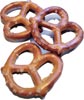
pretzels.jpgThere are many traditions and stories surrounding the food we know today as a “pretzel” and it is difficult to separate the facts from the legends. The exact origin of the pretzel is unknown and, like the doughy treat, its history takes many twists and turns.

“Little Rewards” and “Little Arms”
One tradition says that as early as 610 AD, monks somewhere in Southern France or Northern Italy offered pretzels to children as a “little reward” for memorizing their Bible verses and saying their prayers. The monks appropriately called it a pretiola, Latin for “little reward”. At some point pretiola became brachiola, which is Italian for “little arms” because the pretzel looks like arms folded in prayer. Eventually if found it way to Germany and became known as a Bretzel or Pretzel.

Food during Lent
Since many pretzel recipes didn’t contain any of the ingredients that were avoided during the pre-Easter Lent season – eggs, milk, butter, lard – the pretzel became a popular Lenten food throughout the Middle Ages. Pretzels are still part of the Easter celebrations in many European countries.

Good Luck, Prosperity, Spiritual wholeness
In 1440 AD a page in the prayer book used by Catharine of Cleves depicted St. Bartholomew surrounded by pretzels. They had come to represent the good luck, prosperity and spiritual wholeness.

Everlasting Life and Rebirth
A decade later in 1450, Germans ate pretzels and hard-boiled eggs for dinner on Good Friday – the day of fasting. The large, puffy pretzel symbolized everlasting life, and the two hard-boiled eggs, nestled in each of the large round curves of the pretzel, represented Easter’s rebirth.

Hidden Treat
Soon, at Easter, the pretzel was hidden with two hard-boiled eggs for children to find. This is likely the origin of the Easter Egg Hunt we now associate with Easter, with the difference being now we hide the eggs instead of the pretzels. As pretzels and eggs were often hidden in the hay of a barn, baskets filled with hay were later introduced as part of the festivities.

Hard Pretzels
The hard pretzel seems to have been introduced later. While it may have simply been the result of a recipe for the season of Lent, another story says that a baker’s assistant fell asleep while preparing the pretzels and overcooked them. The Master Baker, in the process of throwing out the spoiled pretzels, decided to taste one of the spoiled brown treats. He discovered he liked the nutty flavor and crunchy taste and realized they would keep longer since the moisture had been completely baked out.

Pretzels as an Easter Symbol
Regardless of the true origins, a pretzel turned upside down does look like arms folded in prayer and the three holes could be used as a symbol of the trinity. Pretzels also resemble a heart and thus can be a reminder of the love God showed when Jesus was crucified for the sins of the world. As the pretzel is broken and eaten, we are reminded that Christ in the Passover meal said that his body would be broken. Some pretzel recipes consist only of water and flour, thus proclaiming Lent as a time of fasting and penitence. In many places of Europe, pretzels are served only from Ash Wednesday to Easter, thus keeping the ancient symbolism alive.

Children’s Sermon
Introduce the Children to an Easter basket filled with pretzels and eggs. When you get questioning looks and discussion about the presense of the pretzels, tell them about the history of the treat, the symbolism, and then give each one a pretzel to eat and as a reminder of so many Easter truths.

Variation
Instead of an Easter Egg Hunt, hide small snack size packets of pretzels. Alternatively, wrap the pretzels in plastic wrap and then hide them. Kids will be curious as to why pretzels have been hidden instead of eggs. Then introduce them to the Easter traditions and symbolism associated with the tasty treat.

Get Creative Youth Ideas: "Easter Collection" ebook Easter Collection
Games and Activities in celebration of Easter.

Get more than 80 creative ideas for planning a Youth Easter celebration or Easter Party. You can immediately download my best Easter Icebreakers, games, illustrations, Easter activity ideas AND MUCH MORE in a useful ebook!

=> Tell me more about the Easter Collection

Filled yet?

While assembling their new water bed, my sister Betty and her husband, Everett, realized they would need a hose. Everett dashed to the hardware store and bought one. They attached it to the bed, ran it through the apartment to the kitchen tap and left to wait for the bed to fill. About an hour later they checked on its progress. That’s when they discovered Everett had bought a sprinkler hose.

Source: Reader’s Digest, March, 1993, Page 123

Get Icebreakers ebookIcebreakers Ahead: Take It To the Next Level

This 170 page resource not only provides 52 of the world’s most popular group icebreaker activities and games, but also includes lesson ideas and discussion questions to smoothly transition into conversations about the issues common to most groups.

Click here to find out how to get your hands on this incredible resource!

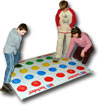
Easter Twister

twister.jpgGame Materials

1. Easter symbols: Choose from among the following symbols based on the size of your group.

Easter items related to the Biblical account:
Gray fleece or donkey (Matthew 21:2-5), Palm branch or a coat (Matthew 21:8-11), A vial of perfume (Matthew 26:7-13), A lock of hair (Matthew 26:7-13), 30 silver coins or 3 10-cent coins (Matthew 26:14-15), A strip of terry cloth fabric or towel (John 13:4-11), A communion wafer or bread (Matthew 26:17-29), A communion cup or grape (Matthew 26:17-29), , Praying hands (Mark 14:32-42), A watch (Mark 13:37), Rooster or a feather (Luke 22:61), Piece of rope (John 18:12), A leather whip (John 19:1), Small piece of soap (Matthew 27:20-24), A piece of scarlet cloth (Matthew 27:28), A crown of thorns (Matthew 27:29), A cross (John 19:16-22), nails (John 19:16-22), Dice (John 19:23-24), darkness or Black circle (Luke 23:44-45), sponge with vinegar (John 19:28-30), spear (John 19:32-37), A shattered or split rock (Matthew 27:51, 54), Purple cloth (Matthew 27:51), Clean linen cloth or gauze (Matthew 27:57-61), Spices (Luke 23:55-56), A stone and wax or paraffin (Matthew 27:65-66), an empty tomb (Matthew 28:5-8), Sign reading “King of the Jews”

Easter items NOT necessarily related to Biblical account:
Basket, Bells, Bonnet, Bunny Hop, Candies, Chicks, Chocolate, Chocolate Rabbit, church, Cottontail, Daffodil, Easter Card, Easter Egg, Egg Hunt, Egg Tree, Faberge, Hard Boiled egg, Hot Cross Buns, Jelly Beans, Lamb, Lilies, Marshmellows, New Clothes, Parade, Passover, Pastel Colors, Peeps, Pretzel, Rabbit, Ribbons, Spring, Straw, Sunday, Sunrise

2. The normal mat in the boxed game that forms the playing surface is decorated with six circles each of red, yellow, green and blue. Instead of the standard twister mat, cut Easter shapes from colored construction paper and use sticky-tack to adhere them to the floor. You can place them randomly or in rows of a single symbol for each row like the original twister game. Vary the number of symbols and rows to accomodate the size of your group.

3. There are two spinners. If you don’t have a spinner you can easily make one. Make a twister spinner that includes right hand, left hand, right foot, left foot. You can also paste these onto the side of a die and roll the die in place of a spinner. The second spinner must contain the same symbols as those placed on the floor. In place of a second spinner you can put the symbols on small cards and place them in a bag.

Game Objective
Touch the symbols on the floor with the correct body part as indicated by the spinner and the color and phrase of the symbol drawn from the bag. Do not let any other part of your body touch the ground.

Game Play
1. An appointed person spins the spinner and chooses the symbol (rolling the die or pulling the card with the symbol on it from the bag) and calls out instructions for the players to follow, such as: “left hand: Blue: Cross”, “right foot: yellow: Empty Tomb”.
2. The players follow the directions, moving their hands and feet to the relevant symbols and try not to fall over–a knee or an elbow on the ground and they’re out. Use the wrong body part or the wrong symbol and you are also eliminated from the game
3. The board can get quite crowded and the participants quite distorted hence the name “Twister.” How flexible are you?

Variation
Instead of playing on an individual basis, divide the group into teams. The team with the last remaining members in the game wins.

Get Creative Youth Ideas: "Easter Collection" ebook Easter Collection
Games and Activities in celebration of Easter.

Get more than 80 creative ideas for planning a Youth Easter celebration or Easter Party. You can immediately download my best Easter Icebreakers, games, illustrations, Easter activity ideas AND MUCH MORE in a useful ebook!

=> Tell me more about the Easter Collection

No Excuse Sunday

  • Cots will be placed in the foyer for those who say “Sunday is my only day to sleep in.”
  • We will have steel helmets for those who think the church is going to fall down
  • Space heaters will be available for those that say the church is too cold, and fans for those who say it is too hot.
  • We will have hearing aids for those who say “The Pastor talks too softly,” and cotton for those who say HE preaches too loudly.
  • Score cards for those who wish to list hypocrites present.
  • Some relatives will be in attendance for those who like to go visiting on Sundays.
  • There will be TV dinners for those who can’t go to Church and cook dinner also.
  • One section will be devoted to trees and grass for those who like to see God in Nature.
  • Finally the Sanctuary will be decorated with both Christmas poinsettias and Easter Lilies for those who have never seen the church without them.

Get Icebreakers ebookIcebreakers Ahead: Take It To the Next Level

This 170 page resource not only provides 52 of the world’s most popular group icebreaker activities and games, but also includes lesson ideas and discussion questions to smoothly transition into conversations about the issues common to most groups.

Click here to find out how to get your hands on this incredible resource!

The Weather Vane

weathervane.jpg

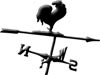
One day C.H. Spurgeon was walking through the English countryside with a friend. As they strolled along, the evangelist noticed a barn with a weather vane on its roof. At the top of the vane were these words: GOD IS LOVE. Spurgeon remarked to his companion that he thought this was a rather inappropriate place for such a message. “Weather vanes are changeable,” he said, “but God’s love is constant.”

“I don’t agree with you about those words, Charles,” replied his friend. “You misunderstood the meaning. That sign is indicating a truth: Regardless of which way the wind blows, God is love.”

Traditional Passover Seder (Simple Version)

Use a traditional Jewish Passover Meal – Seder to introduce youth to Easter.

Preparation
Set a low table with a white cloth, beautiful dishes, and accessories to demonstrate this meal. Furnish low tables, pillows, or rugs, on which the youth and leaders can recline during the observance. Include A large platter—the ke’arah; three matzot—or matzah— the unleavened bread that is to be in three loaves placed in a special cloth of three parts or a napkin folded over twice; goblets for use with grape juice; and a symbolic cup for Elijah. Arrange platter with:

  • Betzah: roasted egg (or hard boiled in salt water), symbolic of the festival offering, Haggigah
  • Zeroa: roasted meat with a bone, symbolic of the paschal or Passover lamb offered on the night of Passover.
  • Maror: bitter herb, usually horseradish, symbolic of bitter slavery in Egypt
  • Karpas: green vegetable, usually parsley or celery, symbolic of springtime with its hope and renewal.
  • Haroset: a mixture of apples (at least 1/2 an apple per person), peeled and chopped fine or grated; chopped walnuts, almonds, or pecans; with chopped or mashed raisins, dates, prunes, or apricots. Cinnamon can also be used—symbolic of the mortar used by the children of Israel in Egypt.
  • Salt water: for dipping the greens.

These items can be arranged in various ways, but tradition has the betzah, maror, and zeroa placed from left to right in one row, and the karpas, salt water, and haroset in the second row.

Give youth copies of the Seder (Order) to be aware of each step in the process and to read responsively the sections for the “group.” Previously decide on hymns to sing as a part of the closing. The meal is led by a person dressed in a white robe. This is known as a “kittel.” White is symbolic of joy and worn on festive occasions. Those partaking of the meal recline at the table as a sign of freedom. That is how free men in ancient times ate.

Begin the Seder with the Kaddesh (or Kadesh) a prayer with wine to sanctify the day of festival:

TRADITIONAL SEDER – (SIMPLE FORM)

LEADER: Now in the presence of loved ones and friends, before us the emblems of festive rejoicing, we gather for our sacred celebration. With the household of Israel, our elders and young ones, linking, and bonding the past with the future, we heed once again the divine call to service. Living our story that is told for all peoples, whose shining conclusion is yet to unfold, we gather to observe the Passover, as it is written:

GROUP: You shall keep the Feast of Unleavened Bread, for on this very day I brought your hosts out of Egypt. You shall observe this day throughout the generations as a practice for all times (Ex. 12:17).

LEADER: We assemble in fulfillment of the mitzvah.

GROUP: Remember the day on which you went forth from Egypt from the house of bondage, and how God freed you with a mighty hand (Ex. 13:3).

LEADER: The leader takes a cup of “wine” and chants the Kiddush:
We take up the Kiddush cup and proclaim the holiness of this Day of Deliverance! It was evening and morning, a sixth day, when the heaven and the earth were finished and all their array. And on the seventh day God finished all the work of creation. And God made cessation on the seventh day from all the work which God had done. And God blessed the seventh day and made it holy. for upon it. God made cessation from all the work of creating.

ALLNext, all wash their hands by dipping their fingers in the bowls of salt water. Then they partake of the karpas by dipping the green vegetable in salt water, and the blessing for the vegetables is said. This part is used to interest the children. It can be explained as the vegetable representing the joyous festival of spring while the salt water reminds of the tears shed by the Israelites in slavery.

LEADERThe leader recites the “Karpas,” for rebirth and renewal.

Arise my beloved my fair one,
And come away;
For lo, the winter is past.
Flowers appear on the earth,
The time of singing is here.
The song of the dove
Is heard in our land. (Song of Songs 2: 10-12)
Let us go down to the vineyards
To see if the vines have budded.
There will I give you my love. (Song of Songs 7:13)

GROUP: Praised are You, Adonai, Sovereign of Existence, Who creates the fruit of the earth (eat the greens)

LEADERAfter the dipping of the greens, the middle loaf of unleavended bread is divided into two parts. If you remember, there are three pieces of unleavened bread. The middle piece is the one broken into two parts. The larger part, the afikoman, is wrapped in a napkin, and hidden under the pillow where the leader reclines. This is to keep the interest of the children throughout the meal. At one point the children try to discover the hiding place, and prizes are awarded to all who participated, with a special prize for the child who finds the bread. That child actually keeps the bread until it is “redeemed” with a gift. At the end of the meal, everyone is given a piece of the afikoman. The smaller piece of bread is returned to its place. As the bread is being broken, the leader begins the “Yahaz,” as a symbol of the bond formed by sharing.

Now I break the middle rnatzah and conceal one half as the afikoman. Later we will share it, as in days of old the Passover offering itself was shared at this service in Jerusalem. Among people everywhere, sharing of bread forms a bond of fellowship. For the sake of our redemption? we say together the ancient words which join us with our own people and with all who are in need, with the wrongly imprisoned and the beggar in the street. For our redemption is bound up with the deliverance from bondage of people everywhere.

GROUP: This is the bread of affliction, the poor bread, which our ancestors ate in the land of Egypt. Let all who are hungry come and eat. Let all who are in want share the hope of Passover. As we celebrate here, we join with our people everywhere. This year we celebrate here. Next year in the land of Israel. Now we are all still in bonds. Next year may all be free.

CHILDThe “Maggid” is the Passover story. It includes 4 questions asked by the youngest child.

  1. Why is this night different from all the other nights?
  2. On all other nights we eat either leavened bread or matzah; on this night—only matzah.
  3. On all other nights we eat all kinds of herbs; on this night, we especially eat bitter herbs.
  4. On all other nights, we eat in an ordinary manner; tonight we dine with special ceremony.

ALLThis is followed by the washing of hands, “Rehatz,” and a blessing, “Motzi,” said by all over the bread.
We praise Thee, O God, Sovereign of Existence, Who brings forth bread from the earth.

ALLThe participants eat that portion of bread. Next, the “Matzah” is said as the next portion is broken, and a bit of horseradish placed on it before eating.
We praise Thee, O God, Sovereign of Existence, Who hallows our lives with commandments, Who has commanded us regarding the eating of matzah.

ALLFollowing that, the bitter herb is dipped into “haroset” and “Maror” is recited.
We praise Thee, O God, Sovereign of Existence, Who hallows our lives through commandments, Who has commanded us regarding the eating of maror.

LEADERFinally, horseradish is placed on a piece of the third piece of matzah, and made into a small sandwich to satisfy the Scripture “they shall . . . eat it with unleavened bread and bitter herbs” (Num. 9: 11). “Korek, or Koreh” is recited.
Preserving a bond with the observance of our ancestors, we follow a practice of Hillel, from the time when the Temple stood. He combined the matzah and maror and ate them together, so that he might observe the precept handed down to him, exactly as his father before him: “They shall eat the paschal lamb with matzah and maror together.” (Num. 9:11 )

GROUP: Together they shall be: the matzah of freedom, the maror of slavery. For in the time of freedom, there is knowledge of servitude. And in the time of bondage, the hope of redemption.

GROUPThe actual meal is started with hard-boiled eggs in salt water, again symbolic of tears and mourning. Other items for the meal are included in the list at the beginning of these instructions. At the conclusion of the meal the child shares the afikoman. “Barekh” or “grace after meals” is said.

May the One Who blessed Abraham. Isaac, and Jacob,
May the One Who blessed our Mothers,
bless this house, this table, and all assembled here;
and so may all our loved ones share our blessing.

LEADER: May the One Who brings harmony into the spheres on high bring peace to earth for all humanity.

GROUP: God will give strength unto our people. God will bless all people with peace.
The “wine” cup is used again. At that time, a child opens the door “for Elijah,” for Elijah is supposed to visit sometime during the meal and take the cup set aside for him. His coming is a symbol of eternal hope, freedom, and salvation. The opening of the door also symbolizes the coming of the Messiah with God’s deliverance. After that “Hallels” are read from Psalm 115—118 and “The Great Hallel,” Psalm 136. These Psalms are used to praise God for His mercy.

Prior to the “Nirtzah or conclusion of the service, the “wine” is drunk again. A closing poem is chanted with the hope expressed that “next year the children of Israel will be in Jerusalem.” Hymns are used to close the celebration.

(Readings from A Passover Haggadah. Herbert Bronstein, ed. New York: Central Conference of American Rabbis, 1974. )

Get Creative Youth Ideas: "Easter Collection" ebook Easter Collection
Games and Activities in celebration of Easter.

Get more than 80 creative ideas for planning a Youth Easter celebration or Easter Party. You can immediately download my best Easter Icebreakers, games, illustrations, Easter activity ideas AND MUCH MORE in a useful ebook!

=> Tell me more about the Easter Collection

What’s in the Easter Basket?

eastereggs.jpgMaterials
1. Sealed Plastic Easter Eggs with small objects inside
2. Paper and pencils for everyone.

Game Objective
The person who correctly guesses the most objects inside the Easter eggs is the winner.

Game Preparation
Place objects inside hollow plastic Easter Eggs and place them in an Easter Basket. Tape the eggs shut with clear tape so no one can take a peek. By shaking them, participants try to identify the contents. Number each egg for easy reference.

Some objects that you might use are:

paperclips, salt or sugar, coins, a marble, a rock, sand, nails, pins, jacks, a ring, a small bell, buttons, hershey’s kisses, jelly beans, screws, keys, M&M’s, dice, thumbtacks, staples, aspirin, flour, rubber ball, cork, cottonballs, rice, beans, peanuts, beads, a chain,
an eraser, scrabble tiles, raisins, etc.

Game Play
Give everyone a piece of paper and pass the sealed plastic easter eggs around. Participants can shake and smell them but cannot open them. Have them write down what they think is contained in the egg beside each number corresponding to the numbers written on each egg.

Variation
List the objects included in the Easter Eggs. Kids try to match the objects with the correct egg that contains it and write the egg number beside the object on your list. For your list you can use some of the objects from Easter Egg Hunt.

Get Creative Youth Ideas: "Easter Collection" ebook Easter Collection
Games and Activities in celebration of Easter.

Get more than 80 creative ideas for planning a Youth Easter celebration or Easter Party. You can immediately download my best Easter Icebreakers, games, illustrations, Easter activity ideas AND MUCH MORE in a useful ebook!

=> Tell me more about the Easter Collection
Watermelon Seeds

I have observed the power of the watermelon seed. It has the power of drawing from the ground and through itself 200,000 times its weight. When you can tell me how it takes this material and out of it colors an outside surface beyond the imitation of art, and then forms inside of it a white rind and within that again a red heart, thickly inlaid with black seeds, each one of which in turn is capable of drawing through itself 200,000 times its weight–when you can explain to me the mystery of a watermelon, you can ask me to explain the mystery of God.

Author: William Jennings Bryan