Cracked Pots

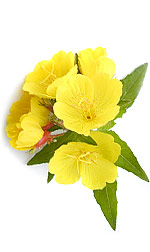
yellow_morning.jpg

A water bearer in India had two large pots, each hung on each end of a pole which he carried across his neck. One of the pots had a crack in it, and while the other pot was perfect and always delivered a full portion of water at the end of the long walk from the stream to the master’s house, the cracked pot arrived only half full. For a full two years this went on daily, with the bearer delivering only one and a half pots full of water in his master’s house. Of course, the perfect pot was proud of its accomplishments, perfect to the end for which it was made. But the poor cracked pot was ashamed of its own imperfection, and miserable that it was able to accomplish only half of what it had been made to do.

After two years of what it perceived to be a bitter failure, it spoke to the water bearer one day by the stream. “I am ashamed of myself, and I want to apologize to you.”

“Why?” asked the bearer. “What are you ashamed of?”

“I have been able, for these past two years, to deliver only half my load because this crack in my side causes water to leak out all the way back to your master’s house. Because of my flaws, you have to do all of this work, and you don’t get full value from your efforts,” the pot said.

The water bearer felt sorry for the old cracked pot, and in his compassion he said, “As we return to the master’s house, I want you to notice the beautiful flowers along the path.”

Indeed, as they went up the hill, the old cracked pot took notice of the sun warming the beautiful wild flowers on the side of the path, and this cheered it some. But at the end of the trail, it still felt bad because it had leaked out half its load, and so again it apologized to the bearer for its failure.

The bearer said to the pot, “Did you notice that there were flowers only on your side of your path, but not on the other pot’s side? That’s because I have always known about your flaw, and I took advantage of it. I planted flower seeds on your side of the path, and every day while we walk back from the stream, you’ve watered them. For two years I have been able to pick these beautiful flowers to decorate my master’s table. Without you being just the way you are, he would not have this beauty to grace his house.”

Each of us has our own unique flaws. We are all cracked pots. But if we will allow it, the Lord will use our flaws to grace His Father’s table. In God’s great economy, nothing goes to waste. So as we seek ways to minister together, and as God calls you to the tasks He has appointed for you, don’t be afraid of your flaws. Acknowledge them, and allow Him to take advantage of them, and you, too, can be the cause of beauty in His pathway.

MORE IDEAS? See “Creative Object Lessons”

200 page e-book that explains everything you need to know when planning your very own object lessons. It contains 90 fully developed object lesson ideas and another 200 object lesson starter ideas based on Biblical idioms and Names / Descriptions of God.

Learn More…

Capture the Flag

frisbee.jpgGame Description
In this game, participants are divided into opposing teams and must “capture their flag” to win.

Game Materials
Flag (Can be a cloth, frisbee, or almost anything easily carried by a participant)

Game preparation
This game requires a large outdoor play area such as a public park or camp setting.

Game Play

  1. The playing area needs to be divided into 2 approximately equal sections (be very specific about all the boundaries!), with some sort of dividing line down the middle. The dividing line can be a sidewalk, a string across the ground, a chalked line or simply an aimginary line between two objects.
  2. Divide the group into two teams.
  3. Each of the 2 teams should be allowed to designate it’s own space anywhere within their area to place the flag. They must also designate a prison area for captured prisoners to remain within. Both should be out in the open (not hidden behind trees or in bushes).
  4. The game is played with flags or objects that the opposing team must seize and deliver to their own area. A frisbee is easier to toss to a teammate so in order to balance that out you might want to have a rule that as soon as it touches the ground, the entire team must cross back over the central territory line before trying to retrieve it again. The object is simply to capture the flags from the other team and bring them back to your own side without getting caught.
  5. Each flag has an imaginary boundary around it of 1 to 5 meters depending on how difficult you wish to make the game as a safe zone. Once a player enters the safe zone they cannot be tagged. Team members cannot enter this area to tag them.
  6. Anyone tagged on the opposition side of the field becomes a prisoner (It works best if prisoners must be escorted back to the prison – this prevents one person from taking more than one prisoner at a time).
  7. Prisoners may be set free by a teammate touching either the prisoner or the jail – you can choose whether one person can free a single person or is allowed to free the entire jail.
  8. Once prisoners are (tagged) freed, they (and the person freeing them) get a free walk back to their side.
  9. The leader may also choose to call a jail break on occasion, which would set all the prisoners free on both sides.
  10. Once the flag is captured by a team and delivered to their side of the play area, the game is over.

Variation

  • Have everyone wear a dark colored shirt. You can make “snow balls” (Put 2/3 cup flour in a nylon stocking (pantyhose) and tying it into a small ball.. You can get about 4 out of one leg of panty hose.) Socks can also be used but are not as effective.
  • In order to capture a person from the other side youth must use the snow balls as bullets. When hit with one there is a telltale white circle on the dark colored shirts. Once a person is hit with a snow ball he is captured and must go to jail.

Get Icebreakers ebookIcebreakers Ahead: Take It To the Next Level

This 170 page resource not only provides 52 of the world’s most popular group icebreaker activities and games, but also includes lesson ideas and discussion questions to smoothly transition into conversations about the issues common to most groups.

Click here to find out how to get your hands on this incredible resource!

Willow in the Wind

Game Description
Use this group building game to build community, teamwork, and trust within the group as members rely on the support of the group to prevent themselves from falling.

Game Materials
Blindfold (optional)

Game Preparation
This game requires a minimum of 8-10 persons to have an appropriate sized circle. Impress upon participants that this is not a time for joking around, but a time to be serious and inspire trust in each other. They need to be encouraging and affirming, helping to alleviate the fear associated with trusting someone else.

Game Play

  1. Blindfold one volunteer or have them tightly shut their eyes.
  2. The group of 8-12 people form a circle shoulder-to-shoulder around the blindfolded volunteer. Spacing is determined by crossing their arms across the chest, palms gripping opposite shoulders and facing toward the inside of the circle.
  3. The blindfolded volunteer is to then to keep a stiff back and fall backward pivoting only on the heels of the feet to allow freedom of movement. The rest of the body should be kept straight.
  4. Those in the circle carefully pass the volunteer around the circle using their hands as a willow gently flexing in the wind.
  5. On occasion gently change the direction of the volunteer being passed around the circle. The volunteer is totally under the control of those in the circle.
  6. Allow each member of the group to try being the volunteer.

Discussion Ideas

  • Trust: How did it feel be forced to rely on someone else? What fears did you have? Did you trust they would prevent you from harm? How does this relate to trusting God with our lives?
  • Support: In this game we have to support someone in the group. Do we as a group have an obligation to look out for each other? What are some of the ways we can support each other in our lives?
  • Reliance: In this group, the person in the center had to rely on the group. What are some of the ways we have to rely on each other in the Christian life? Do we need each other?

Get Icebreakers ebookIcebreakers Ahead: Take It To the Next Level

This 170 page resource not only provides 52 of the world’s most popular group icebreaker activities and games, but also includes lesson ideas and discussion questions to smoothly transition into conversations about the issues common to most groups.

Click here to find out how to get your hands on this incredible resource!

Morning Paper

newspaperboy.jpgMany years ago, a newsboy, thinly clad and drenched by the soaking rain, stood shivering in a doorway one cold day in November. First one bare foot and then the other was lifted for a moment and pressed against his leg to get a little warmth. Every few minutes his shrill cry could be heard, “Morning paper! Morning paper!”
A man who was well protected by his coat and umbrella stopped to buy the early edition. Noting the boy’s discomfort, he said, “This kind of weather is pretty hard on you, isn’t it?”

Looking up with a smile, the youngster replied, “I don’t mind too much, Mister. The sun will shine again.”

What a picture of the Christian life! Chilling winds of adversity and grey skies of a sinful environment can easily discourage us. But we can always count on better days because we know God is working in our lives.

Tools

on_the_anvil.jpg

In the shop of a blacksmith, there are three types of tools.

There are tools on the junkpile: outdated, broken, dull, rusty.
They sit in the cobwebbed corner, useless to their master, oblivious to their calling.

There are tools on the anvil: melted down, molten hot, moldable, changeable.
They lie on the anvil, being shaped by their master, accepting their calling.

There are tools of usefulness: sharpened, primed, defined, mobile.
They lie ready in the blacksmith’s toolchest, available to their master, fulfilling their calling.

Some people lie useless: lives broken, talents wasting, fires quenched, dreams dashed.
They are tossed in with the scrap iron, in desperate need of repair, with no notion of purpose.

Others lie on the anvil: hearts open, hungry to change, wounds healing, vision clearing.
They welcome the painful pounding of the blacksmith’s hammer, longing to be rebuilt, begging to be called.

Others lie in their Master’s hands: well-tuned, non-compromising, polished, productive.
They respond to their Master’s forearm, demanding nothing, surrendering all.

We are all somewhere in the blacksmith’s shop. (pp11-12)

Which are you?

Author: Max Lucado
On the Anvil (ISBN 0-8423-4568-X)


MORE IDEAS? See “Creative Object Lessons”

200 page e-book that explains everything you need to know when planning your very own object lessons. It contains 90 fully developed object lesson ideas and another 200 object lesson starter ideas based on Biblical idioms and Names / Descriptions of God.

Learn More…

Soap Bubble Relay

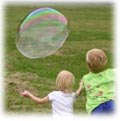
soap_bubble.jpg


Game Description
In this relay race groups must blow and fan soap bubbles to a destination and back.

Game Materials

  • Soap bubbles
  • Soap wands (Bubble wands can be purchased or easily created from clothes hangers or just about any available wire.)
  • Paper fans (optional)
  • one pie tin or shallow pan for each group

Game Preparation
You can purchase bubble solution or make your own. To make your own you will need:

  • A plastic mixing bucket
  • 1 gallon distilled water. Tap water does not work too well and bubbles do last as long.
  • 12 oz. of dish washing liquid (Non-Ultra Dawn Original Scent or Joy are recommended)

Here’s how:

  1. Add the entire gallon of distilled water into your mixing bucket.
  2. Stirring SLOWLY so as not to make lather, add in the 12 oz. of dish washing liquid
  3. Gently stir in 3 tablespoons (1 oz) of glycerin
  4. For longer lasting but smaller bubbles add 4 ounces more dish washing detergent 2-4 more tablespoons glycerin.

Various dish washing detergents will have different characteristics so experiment a little to get the best solution. Also, higher humidity days allow the bubbles to last longer so this is great for rainy days.

Game Play

  1. Pour soap solution into 1 pie pan for each group.
  2. Each team is given a soap bubble wand
  3. In this relay the racer must blow a bubble and then blow or fan it across the room and back.
  4. If any team’s soap bubble breaks before it can be fanned acoss the goal line, than a new bubble must be blown at the point where the last one broke.

Variations

  • This can be done in pairs as well, with one person the designated bubble blower and the other responsible for fanning the bubble. In this case, the bubble blower should follow behind the person who is fanning the bubble.
  • Add a stopwatch and you can have a competition to see which team’s bubble lasts the longest.
  • Have a competition to see which team can blow the most unique bubble arrangement.
  • Have a competition to see which team can blow the biggest bubble.

Potential Applications
This can be used as a discussion starter about the things in life that are temporary vs. eternal. Are you focused on things that will last? What things will last? (Matthew 6:19-21; Luke 12:15-21)

MORE IDEAS? See “Creative Object Lessons”

200 page e-book that explains everything you need to know when planning your very own object lessons. It contains 90 fully developed object lesson ideas and another 200 object lesson starter ideas based on Biblical idioms and Names / Descriptions of God.

Learn More…

Compassion In Your eyes

A number of years ago in Northern Virginia, an old man stood by a river bank waiting to get across. Since it was bitterly cold and there was no bridge, he would have to “catch a ride” to the other side.

After a lengthy wait, he saw a group of horsemen approaching. He let the first pass, then the second, third, fourth, and fifth. Finally, there was only one rider left. As he drew abreast, the old man looked him in the eye and said, “Sir, would you give me a ride across the river?” The rider without a moments hesitation said, “Why certainly, get abroad.”

Once across the river, the old man slid to the ground. Before leaving the rider asked, “Sir, I could not help but notice that you permitted all the riders to pass without asking for a ride. Then, when I drew abreast you immediately asked me for a ride. I’m curious as to why you didn’t ask them and why you did ask me?”

The old man quietly responded, “I looked into their eyes and could see no love and knew in my own heart it would be useless to ask for a ride. But, when I looked into your eyes, I saw compassion, love, and the willingness to help. I knew you would be glad to give me a ride across the river.”

With this the rider very humbly said, “You know, I’m very grateful for what you said. I appreciate it very much.” With that, Thomas Jefferson turned and rode off to the White House.

If you had been the last rider, would the old man have asked you for that ride across the river? When people look at you do they see Christ?

– Zig Ziglar


MORE IDEAS? See “Creative Object Lessons”

200 page e-book that explains everything you need to know when planning your very own object lessons. It contains 90 fully developed object lesson ideas and another 200 object lesson starter ideas based on Biblical idioms and Names / Descriptions of God.

Learn More…

God is my father

Introduction
Knowing they have a heavenly father can make children feel protected and cared for. Many children have known the loving care of earthly fathers and can easily comprehend God as a caring father. For other children, “father” isn’t a pleasant term. Some children may never see their fathers. Some fathers have mistreated their children. Use this lesson to introduce children to their loving, caring heavenly father-God. And redefine the term “father” for those children who haven’t had a good experience with their earthly fathers.

Game Description
Children will explore Fatherly qualities in God. The goal is to help children learn that God is a father who will never leave and who will always treat them with kindness and love.

Game Materials
You’ll need men’s dress-up clothes such as old shoes, jackets, shirts and ties.

Game Play

  1. Invite kids to put on one or two items of the dress-up clothing that fathers wear. Give them several minutes of playtime to act like dads. Encourage responses by asking questions such as “How do fathers talk?” “What do fathers do?” “How do fathers walk?” and “What do fathers like?”
  2. Have children sit in a circle.
  3. Ask: Are dads always perfect?
  4. Say: Our fathers are human, and sometimes they make mistakes just like we make mistakes sometimes. Today we’re going to talk about a special father who is perfect. We call God our heavenly father because he lives in heaven. God is perfect-he’ll always love us and take care of us.
  5. Ask: What do you call your earthly father?
  6. Say: Children in every country have special names for their fathers. You may call your father “Daddy.” A Japanese child might call his or her father “Chichi.” A German child might say “Papa.” In the Bible, Jesus called God “Abba.” Let’s sing a song to our heavenly father in all these languages. Lead children in singing “Father, I Adore You.” Each time you sing a new verse, insert the other-language words for “father”: daddy, chichi, papa and abba.

Closing Application
Close with this prayer: Father God, thank you for taking care of us. We know you are a perfect father. You love us and you’ll always take care of us. Amen.

MORE IDEAS? See “Creative Object Lessons”

200 page e-book that explains everything you need to know when planning your very own object lessons. It contains 90 fully developed object lesson ideas and another 200 object lesson starter ideas based on Biblical idioms and Names / Descriptions of God.

Learn More…

Gifts to Edify

Game Description
Use this simulation game / structured experience to discuss the use of gifts in the church- the body of Christ.

Game Materials

  • Blindfold
  • Location with numerous obstacles

Game Play

  1. Blindfold one participant who will be guided by the other groups through an obstacle course. This should involve climbing over/under tables, walking over a bridge (a row of chairs) or any aother creative obstacles that do not endanger anyone’s life! Of course there is a small element of risk, but that adds to the simulation.
  2. Assign at least 7 other participants one of the seven spiritual gifts mentioned in Romans 12: 6-8: Prophecy, Service, Teaching, Exhortation, Giving, Leadership, Mercy.
  3. Give each participant time to plan how they will be involved in guiding the blindfolded person based on their gift. Then let the group meet together and discuss how they will work together to get the person safely through the obstacle course. Help them decide the role of each person based on their gifts.

Discussion

  1. How did your actions contribute to the successful completion of your task?
  2. What effect would the absence of your “gift” had on the outcome of this simulation?
  3. What comparisons can we draw between this exercize and the use of gifts in the church- the body of Christ?

Some possible Applications

  • Prophecy warns of danger if a wrong turn is taken
  • Service physically guides the person
  • Teaching helps provide instructions to the person guiding the blindfolded
  • Exhortation provides encouragement to the group and blind-folded persons
  • Leadership directs the group to get the task accomplished
  • Giving provides a map or other resources
  • Mercy looks potential danger and helps protect the person from a fall

MORE IDEAS? See “Creative Object Lessons”

200 page e-book that explains everything you need to know when planning your very own object lessons. It contains 90 fully developed object lesson ideas and another 200 object lesson starter ideas based on Biblical idioms and Names / Descriptions of God.

Learn More…

Creative Youth ideas: 1700+ Resources for youth leaders, pastors, ministers to help plan camps, retreats, and meetings using games, illustrations, Children's Worship, Bible Studies, object lessons, sermons, creative ideas,creative activities