Beach Scavenger Hunt

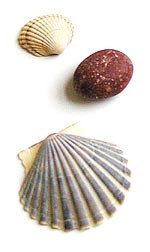
shellsandpebble.jpgMaterials
List of items that can be found on an ocean beach or seashore

Preparation
Make a list of items that can be found on a beach. A list of items is provided below. Value them on their rarity. Depending on the beach and the time of the year, remove those items that cannot be found. But the beach is an amazing place. You never know what you will find! You might include points for each different kind of shell found. Some items are for a travel hunt to retrieve the items, almost all can be used for a photo scavenger hunt if you prefer that type of hunt.

Scavenger Hunt Description
Planning a trip to the beach or seaside? In this scavenger hunt you will need to find and retrieve objects that are on the beach. The team which collects the most items in the list within the designated time limit wins!

Example items you could choose
abalone shell, algae, anchor, barnacle, beach ball, beach towel, bolt, canoe, coconut, coral, crabclaw, crab, shell, driftwood, feather, fish bone, fishhook, fishing line, flipper, foam, Frisbee, glass ball, kite, largest shell, lifeguard, lighthouse, mollusk-shell, moss, nautilus shell, nut, bolt, palm frond, perfect shell, piece of a boat, piece of a sail, sailboat, rope, round shell, sand castle, sand dollar, sand-shovel, scallop shell, sea sponge, sea urchin spine, sea glass, seaweed, seed, ship, sign, smallest shell, snail shell, something metal, something plastic, something rubber, something unusual, starfish, stone worn smooth, surf board, surfer, tar

See Conducting Scavenger Hunts for help, Hints, Safety Considerations, Rules, and other useful information to make your scavenger hunt a wild success!


scavenger_hunts_ebook_sm.jpgCreative Scavenger Hunts: Once Lost, Now Found

is a 160 page e-book that explains everything you need to know to easily plan your very own scavenger hunt: Item Lists, Rules, Riddles, Safety Tips, Guidelines, Scoring, Tips for Facilitators and MORE! There are more than 50 complete ideas (scavenger hunts, photo hunts, video hunts, amazing race, etc.) to use at home, around the neighborhood, at the mall, in the park, on the beach, at church, and around town!

=> Tell me more about the Creative Scavenger Hunts

Eight Masks of Teens with Unmet Needs

Teenagers put on masks to hide their feelings. They choose these masks unconsciously, but the masks can express the feelings and thoughts of the teenagers. Here are the masks often used by teenagers

PENNY THE PERFECTIONIST
Teenagers put on this mask to prove themselves to their parents. This masked teenager becomes a perfectionist, compulsive about work and dissatisfied with personal accomplishments. This mask covers up the unmet needs of acceptance, unconditional love, and appreciation.

EXPLOSIVE EMILY
This teenager holds the pain, hurt, and rejection. Then one day she explodes, spewing angry words and negative behavior over anyone nearby. The explosion just happens. Teenagers in abuse situations may wear this mask, although other situations can cause deep feelings of pain and rejection. This mask covers up the unmet needs of comfort, respect, love and attention.

DIRECTIONLESS DOUG
This teenager lacks direction or purpose. He hangs out at the mall, not caring about school, sports or other activities. He may drop out of school and work at several low paying jobs. Occasionally a teenager wearing this mask runs away from home, but without a specific plan. Although this teenager doesn’t get attention at home, he lives at home because it’s rent-free. This mask covers up the unmet needs of direction and purpose, support, and encouragement.

CONFRONTATIONAL CHRIS
This teenager loves to pick a fight. He’s known for attacking others verbally. Debates usually turn into arguments. In some instances arguments end in physical confrontation. Violence or vandalism can be an expression of his anger. He may even join a gang or hang out with destructive friends. As a result, this teenager lacks hope, believing he won’t live beyond his teenage years. This mask covers up the unmet needs of encouragement,
Feeling valued, comfort and love.

PROMISCUOUS PETE
This teenager chooses sex as a substitute for love. For guys this becomes a sexual contest taken to extremes. For girls it can be a desire to belong to somebody _ anybody. Research has shown that teens will often use sex as a means to express and satisfy emotional and interpersonal needs that have little or nothing to do with sex. Sex becomes a coping mechanism to deal with the absence of love and affection at home. This mask covers up the unmet needs of love and affection, nurturing and support.

JILL THE JOKER
This teenager makes others laugh to get attention. At first the behavior is funny, but the constant jokes at inappropriate times and the constant demand for the spotlight make it difficult to tolerate this teenager for long. This ‘s parents never look beneath the humor to see the hurting. This mask covers up the unmet needs of attention, respect, values and appreciation.

SECLUDED SALLY
This teenager uses a mask to withdraw from the world. She sees herself as the victim of life. Everything that happens to her is intentional. Every criticism, correction, or suggestion is spoken to hurt her feelings. She trusts no one. She comes home from school and goes directly to her cave (room). This teenager nay not try anything like sport or going to camp because she believes she will fail. This teenager believes she is inferior because she feels inferior. This mask covers up the unmet needs of respect, appreciation, security, significance and purpose.

FRANK THE FOLLOWER
A teenager wearing this mask is easily swayed to the crowd. Even though the crowd may change (school, church, ball team), this teenager goes along with whatever they decide to do – well or bad. The mask covers up the unmet needs of acceptance, attention, being valued as a person, and love.

Application:
Reflect on the masks you youths might be wearing, and why and how you can help them to satisdy the unmet need that so the mask can be removed and they can be themselves.


Get "Creative Sermon Ideas" eBook

Get Help on Your Youth Sermons

Creative Sermon Ideas
This 100 Page e-Book Includes All The Help You Need To Prepare Powerful, Life-Changing Youth Sermons That Will Turn Your Preaching Around And Make Your Youth Sit Up And Listen! Includes 7 Complete Sermons.
–> I want More Youth Sermon Ideas…

Life’s but a Flash

Life is but a flash in an eternity of time
Controlled by the master’s Perfect design
Easily snuffed out in the blink of an eye
Ours not to question, nor to ask “why”

How much time does my hourglass hold
How much time till I see streets of gold.
I know not the hour, not even the day.
So, what shall I do? What shall I say?

Live each moment like there won’t be another
Sharing God’s love, serving each other
Working the harvest, watering seeds sown
Knowing Gof better and making God known.

Copyright ©1989 by Ken Sapp. All Rights reserved!


Murphy’s Laws of Youth Ministry

YOUTH MINISTERS HAVE THEIR OWN VERSIONS OF MURPHY’S LAW-“IF ANYTHING CAN GO WRONG, IT WILL.” I THINK YOU’LL RECOGNIZE YOUR FAVORITES, INCLUDING:

THE LAW OF LAST-MINUTE SUBTRACTIONS AND ADDITIONS 
Even though you’ve recruited the exact number of drivers you’ll need for your upcoming youth trip, it’s never enough. Five minutes before you’re set to leave, a driver cancels (or the corollary-three unexpected kids show up).

MURPHY’S BUSTER: Use a signup sheet for the trip with an RSVP deadline and make no exceptions. It sounds harsh, but this is a great way for young people to learn responsibility. Ask a responsible volunteer or group leader to coordinate your transportation needs. Then make sure you have a back-up driver ready just in case.

THE LAW OF DIMINISHING GAS 
Even though your facilities manager swears he filled the tank yesterday, the gas gauge in the church van always reads empty when you’re ready to leave.

MURPHY’S BUSTER: Inspect your vehicles the day before your trip or at least one hour before the kids show up. Make sure you have a church credit card or money for gas. And have a plan in case the vehicle breaks down while on the road

THE LAW OF FRUSTRATING PHOTOCOPIERS
Even though it was repaired last week, your photocopy machine will conk out five minutes before the meeting starts-and you still need 20 copies.

MURPHY’S BUSTER: Plan your schedule to prepare ahead of time so you can make your copies the day before the meeting

THE LAW OF VANISHING GUEST SPEAKERS 
Even though you’ve covered for yourself while you’re on vacation, the guest speaker you lined up will not show.

MURPHY’S BUSTER: Have a Plan B always ready. Tell another staff member about your plan so he or she can step in if there’s a last-minute cancellation

THE LAW OF EMBARRASSING DAMAGE
Even though you have seven cars hauling kids to the retreat, the one that gets “dinged” is the non-Christian parent’s car.

MURPHY’S BUSTER: Before the trip, warn your parent volunteers about possible damage to their vehicles. Check your church’s insurance policy to see if it might cover incidental damage. And when you plan a meeting at someone’s home, ask to rearrange the meeting place to remove anything that might get damaged

THE LAW OF INEVITABLE TARDINESS
Even though you’ve screamed your departure time from the rooftops, you’ll still pull out late because someone’s late or forgot the permission slip.

MURPHY’S BUSTER: Make sure you’re ready to leave on time. Many youth leaders model tardiness. Have a policy that you ll not wait for stragglers. Tell your group members to be on time or get left behind

THE LAW OF EMPTY COFFERS
Even though the church treasurer promised you an expense check before you leave, it’s time to go and you still don’t have it. Of’ course, the treasurer isn’t home and can’t be located

MURPHY’S BUSTER: Ask the treasurer to give you the check in advance Even if you don’t know the exact amount, let the treasurer decide how much to give you

Source Unknown


Get "Creative Sermon Ideas" eBook

Get Help on Your Youth Sermons

Creative Sermon Ideas
This 100 Page e-Book Includes All The Help You Need To Prepare Powerful, Life-Changing Youth Sermons That Will Turn Your Preaching Around And Make Your Youth Sit Up And Listen! Includes 7 Complete Sermons.
–> I want More Youth Sermon Ideas…

Blind Polygon

Group Size: 10 to 30
Time: 30 minutes
Applications: ALIGNMENT, Listening, Roles, Group Dynamics, Problem-Solving

Materials
1. a blindfold for each participant
2. a 15-30 meter rope connected into a circle

Objective

For the group to form a perfect square / triangle with a rope while blindfolded.

Instructions
1. Blindfold the group
2. “This game is played in rounds. Each round will have a task to complete”
3. “When you move, do so slowly and with your hands out in front of you to prevent injury.”
4. “Any Questions?”

Round 1
1. Lay the rope on the ground somewhere in the middle of the group.

2. There is something in your midst you need to find. You will know it when you find it.”

3. Your objective is for everyone to be holding it.

4. Begin.

When everyone is holding the rope. Congratulate them on a job well done. Then announce round 2.

Round 2
1. You must remain blind-folded and holding the rope.
2. You have 20 minutes to make the rope into as perfect a square as you can.
3. Begin.

When the group decides that it has completed a square, allow them to remove their blindfolds and check their work. Total time to this point is 30 minutes.

Round 3
1. You must remain blind-folded and holding the rope.
2. You have 10 minutes to make the rope into as perfect of an equilateral triangle as you can. (3 equal sides)
3. Begin.

When the group decides that it has completed a perfect triangle, allow them to remove their blindfolds and check their work. Total time to this point is 40 minutes.

Facilitator Notes

You can use smaller groups and shorter ropes and make it a competition. For additional application, videotape the activity and play it back for the group(s) to see. Pause at key turning points and significant moments in the process. Invite the participants to make observations.

Debrief
General Debrief
• “What happened?”
• “Why?”
• “What changed?”
• “So What?”
• “Now What?”

“What happened?”
1. What happened?
2. How did order develop out of chaos?

“Why?”
3. What factors limited your success?
(frustration, lack of cooperation, ego/pride, weakly developed goals, lack of enthusiasm/motivation, lack of direction, lack of alignment, need for instant results, not knowing your position in the overall scheme of things, lack of teamwork)
4. What factors contributed to your eventual success?
(concentration, knowing your place in the overall scheme of things, designating clear roles for important positions like the corners, aligning yourself to those nearest you, clear expectations/rules, ability to see the “bigger picture”, encouragement, enthusiasm, clear goals, being able to deal with frustration, putting aside ego, effective leadership)

“What Changed?”
5. What did you do to bring order from the chaos?
(someone must take charge, discussion of strategy, more attentive to our position related to those around us, clear communication, keeping focused on the task, relinquish some control & power to a leader, manage frustration, play to group member strengths, share insights, cooperation, etc.)

“So What?”
6. What are the possible applications of the lessons learned from this activity to business, personal development, spiritual life, and relationships?

KEY APPLICATION: Alignment

Business
Why is it important for a team to be aligned? How do we take a group of people with different goals and directions and align them to accomplish a task? What are the key positions / people in your organization or business to help you align your team? What is the most effective way to bring someone who is out of alignment with the organizations goals and directions into alignment? Why is it sometimes important to put the group goal ahead of personal goals? How important is having a system to bringing about alignment? Clear communication? Proper planning and sticking to the plan?

Personal
What are some things that people use to find personal direction in life? What things do people use to align their lives? What are your key reference points for your life (corners)? What are you aligning your life with? How accurate are these guides? How does a sense of direction help us in the twists and turns of life and bring about order from chaos? What shape do you want your life to take? What steps will help you to shape your life to what you want to become as a person—to shape your character? What steps will it take to help you achieve what you want in life?

Spiritual
How does your faith provide direction in your life? What spiritual truths and precepts are most important for providing direction in your life? How do they help you to align your life? What area of your life is most chaotic at the moment? What area is out of alignment with the will of God? How can you bring your life back into alignment? What are the key reference points (corners) in your life? How do they help bring order to your relationship with God and others?

Relationships

Would you describe your significant relationships as chaotic or in order? Are those nearest to you helping you to discover your place in the patterns of life? If you had to describe your relationships as a shape, what shape would it be? Why? Do you have a common sense of direction with those closest to you? Is this good or bad? What are the key reference points in your relationships? What are the key characteristics and character attributes that give them shape? In what areas of your relationships would you like to have more order? More freedom?

Now What?
7. What will you do differently as a result of this activity?

Get Icebreakers ebookIcebreakers Ahead: Take It To the Next Level

This 170 page resource not only provides 52 of the world’s most popular group icebreaker activities and games, but also includes lesson ideas and discussion questions to smoothly transition into conversations about the issues common to most groups.

Click here to find out how to get your hands on this incredible resource!

Tempered

I once heard a story about a startling exhibit in Del Mar, California. A man took a glass beaker which had a small neck, but was enlarged to about seven inches in diameter below the neck. The beaker would hold about a quart. The demonstrator used the glass beaker as a hammer to drive a spike into a wooden plank. The glass was so well tempered that the beaker did not break. The man then took a small steel marble or bearing the size of a pea, and holding it at the neck of the beaker, dropped it inside. When it struck the bottom the glass was shattered and the beaker was broken from within.

The Church of our Lord, when perfectly united and tempered together with love, can resist the heaviest of blows from the outside. But just a small force on the inside can destroy this unity and harmony.

Author Unknown
PULPIT HELPS, Sept., 1990


The Musician

For half a lifetime he wandered the empty night, alone and hopeless, until a simple melody pierced the darkness and caught his attention. Making the melody was a young man, a musician, with a sensitive ear, and an even more sensitive heart. The musician walked the same street, but he walked, not by sight, but by sound. As he encountered people he saw beyond their masks. He heard the sounds of their voices and felt the rhythm of their heartbeats. He saw each life as an instrument and within each heart a potential melody. And though one man hid behind his sunglasses, the musician heard his heart. Rather than trusting his vision, he used his music to pierce through the empty shell, and like the clapper in a church bell, encouraged the sound of love to ring out from the
darkness.

As that love rang out, the musician was himself touched. He realized he could do more than just listen to the music of others — he could do more than simply share a melody. With his sensitive ear, and his more sensitive heart, he could help tune other instruments and help other hearts make a melody. He discovered that a solitary note in a lightless reality could be added to his own, and two notes provide a wonderful harmony. They compliment each other. As the harmony grows, new notes are shared and in time a melody of praise and worship fills the air!

A solitary figure stumbling down a darkened street is replaced by two musicians dancing in the sunlight as the sound of their music drives away the darkness. They know their most significant achievement is their song. Sometimes their moving melodies diverge and at other times they are again rejoined in harmony. Sometimes the timing is out of sync and the notes are flat. There may be moments of discord, but the music continues and, with it, others draw near to listen. Soon, they also join in the song as each rings out in his own special way. In time, as each plays his part, the Composer’s manuscript will be heard as he intended–as a grand symphony of Praise and Worship.

Take note When you can’t see in the dark, you can follow the music!

THOUGHTS?
Do you feel you are stumbling alone in the dark?
Would you describe yourself as the musician or the man hidden behind the sunglasses?
What is it you hide behind?
Do you judge others by what you see (i.e. by appearances) or by their heart?
Do you see the potential in others or do you focus on the flaws?
Is your life a melody of the love of God?
Are you a solitary note? Do you bring discord or harmony?
Is your life out of tune or out of sync?
What is your part? What melody have you been chosen to play?
The most significant thing you can do with your life is praise and worship of your Creator!
When your life becomes a song of praise and worship you will be unable to stop yourself from singing out, and will boldly proclaim his love to all you meet. Have you lost your song?
What needs to happen in your life, for you to get back in tune, to become and instrument of praise and worship?

Copyright ©2000 by Ken Sapp. All Rights reserved!


MORE IDEAS? See “Creative Object Lessons”

200 page e-book that explains everything you need to know when planning your very own object lessons. It contains 90 fully developed object lesson ideas and another 200 object lesson starter ideas based on Biblical idioms and Names / Descriptions of God.

Learn More…

Helium Stick

Group Size: 10 to 30
Time: 20-60 minutes
Applications: Trust, Communication, Frustration, Blame, Focus, Shared Vision, Problem-solving, Commitment/Effort, Compensating for Differences

Materials
The filled stick (Really, just an ordinary 8 foot long light tent pole.)

Summary
The stick is very common team building game but one which proves difficult even if one or more participants have done it before. The stick seems to defy the laws of gravity and takes an incredible amount of well-coordinated teamwork to be successful. The basic idea is incredibly simple – lower a slim, wooden dowel to the ground all together as a team, but just as incredibly difficult to achieve. The stick rises into the air instead of getting lowered to the ground. How can that be? The team must work it out and find the solution.

Objective
Lower a thin stick to the ground as a group while everyone mains contact with their index fingers.

Instructions
1. “Form two lines facing each other and standing shoulder to shoulder.” (The lines must be close to each other –approximately 12 – 18 inches apart). 2. “Put your hands into a representation of a gun and down at your side.”
3. “On the count of 3– Quickdraw like a gunslinger from the American West!”
4. “1, 2, 3, DRAW”
5. “Good thing this isn’t the real west… I think you would have all killed each other!”
6. “Put both index fingers out zipper style (interlacing with your neighbor).”
7. Place the Stick – on top of the outstretched fingers. THIS PART IS IMPORTANT – when you place the tent pole on their fingers, do so from behind and in the middle of one of the lines ALWAYS KEEPING YOUR HAND ON TOP OF THE POLE to prevent the group from raising the pole in the air. Apply enough pressure on top of the pole to prevent the group from rising up.
8. While still holding it and putting a slight unnoticeable downward pressure, ask participants to “Please adjust your index fingers to roughly chest height so that all are touching the stick.”
9. “Your challenge is to lower the Stick to the ground. While doing so, each persons fingers must be in contact with the stick at all times.”
10. “No one may lose contact with the pole. If anyone loses contact with the stick the entire group must start again.”
11. “The starting position is with the pole at waist level.”
12. “You may not drop the pole”
13. “You must keep the sides of your index fingers touching at all times. Not the back, not your palms, and not hooking the pole with your finger. You cannot put your fingers on top of the stick. If one person’s finger comes off at any time, you start over.”
11. Release your pressure on the stick. Typically, the Stick will immediately start floating off!
12. Act surprised and ask them why they are raising the Stick instead of lowering it!

Facilitator Notes
1. When you place the stick on the group’s fingers, be sure to apply a slight downward pressure before letting them begin. This helps create the initial upward pressure that creates the ” stick.”
2. The Stick will continue to mysteriously have a habit of floating upwards rather than coming down. Often the more a group tries, the more it floats (as people get nervous their fingers jitter the Stick upwards). Participants may be confused initially about the paradoxical behavior of the Stick.
3. Its likely to take several attempts to just keep the tent pole steady (not lowering or raising).
4. Some groups or individuals (most often larger size groups) after 5 to 10 minutes of trying may be inclined to give up, believing it to be impossible. Suggest the group stop and discuss their strategy.
5. Eventually the group needs to calm down and very slowly, patiently lower the Stick.
6. If they get really frustrated, you can suggest they might want to stop and discuss what’s happening. You can either allow them to keep trying until they get it, or stop them when they’ve had enough. It’s a judgement call.

Safety Warning
The ends of the tent pole can be dangerous if the pole starts moving quickly
and hits someone in the face. Take precautions to prevent injury.

Variations
1. Add a washer to each end of the pole. Don’t drop the washer.
2. Have people pair up and supply each pair with a very short tent pole (18 inches). Have each pair lower their own pole to the ground so they can experience success. Then have people form groups of 4 and then provide them with a tent pole just long enough for 4 people. Have the groups of 4 work together to lower the pole. Continue making bigger groups until you have everyone working together on one tent pole.

Debrief
General Debrief
• “What happened?”
• “Why?”
• “What changed?”
• “So What?”
• “Now What?”

“What happened?”
1. What happened?
The results were initially the opposite of what was desired.

“Why?”
2. What factors limited your success?
(frustration, blame, gave up, lack of focus, lack of understanding the real problem, need for instant results, Failure to adjust to differences, Too many leaders,)
3. Did everyone understood the objective and the rules?
4. Was anyone intentionally trying to sabotage the group’s objective by lifting the stick?
5. Did everyone believe the task was acheivable?
6. Did everyone sincerely want to accomplish the objective?
7. If everyone understood the Objective, and was committed to succeeding, why did the group get so far off track right away? (didn’t plan well, over compensated, thought we were doing our part, etc)
8. What factors contributed to your eventual success?
(concentration, focus, patience, gentleness, adjusting to differences in height, strength, etc, unity – not trying to outdo others, communication, encouragement, perseverance, being able to deal with frustration, effective leadership)

“What Changed?”
9. What did you do to make your objective a reality?
(someone must take charge, discussion of strategy, more attentive to our position and differences and similarities related to those around us, clear communication, patience, keeping focused on the task, following the leader, manage frustration, play to group member strengths and compensate for weaknesses, share insights, cooperation, etc.)

“So What?”
10. Share some examples of groups that they have participated in “the real world” that seemed to be comprised of committed people, but were not achieving the results that everyone wanted? What insights might this game shed on those situations?
11. What are the possible applications of the lessons learned from this activity to business, personal development, spiritual life, and relationships?

KEY APPLICATION: When the best plans go awry.

Business
This activity mirrors the business dynamic of projects starting out well, but quickly going awry. Why is that? Sometimes the best laid plans just don’t work out. Having a clear vision is one thing but making it a reality is often another. The fact that everyone understood and was committed to the vision isn’t enough. It immediately went in the OPPOSITE direction from where you were trying to go – UP! Have you experienced any parallels to real life while doing this activity. What you do as a team when plans go awry has everything to do with team work, trust and communication.

Personal
Did you establish a plan early or simply react? Reacting without a plan can make the situation worse. What are some character attributes you would like to develop in your life? What are some bad traits that you would like to put down and suppress? Sometimes in trying to suppress things in our life we achieve the opposite effect. The key is to find balance and calm to deal with those things that lead us away from our goals. What are some frustrations that you have in life? How do you put aside the frustrations so that you can have the perseverance and calm to achieve your goals?

Spiritual
Sometimes when we spiritually strive to achieve spiritual fruit in our lives, we seem to get further away from where we want to be. The key is to rest and relax in the strength of God rather than trying to do things in our own strength. What are some areas of your life that you need to simply turn over to God and let him work them out? What are some areas where you are struggling and dealing with frustration and about to give up? How can you put them into God’s hands? Scripture is filled with paradoxes: The poor in Spirit shalln be Rich. The weak are strong. What are some spiritual paradoxes in your life?

Relationships
Do the results in your relationships sometimes seem to be opposite of what you desire? Do you have a tendency to take responsibility to work together to reduce the tension and work things back to a level of calm, or do you blame and do things that create more tension in relationships? What is your typical response when you feel others are to blame for the relationship not going the way you desire? Does this response help or hinder the relationship? If you are blamed, have fingers pointing at you, how do you feel? What is your typical response? (In the game, any tiny movement or even nervousness by one person causes jitters that eases the pole up, achieving the opposite result of what was wanted.) How can you bring calm and focus to your relationships? What feelings and emotions tend to rise up, even when you are trying to put them down? Are there times you feel like giving up? What is it that keeps you focused and committed in the relationship to see it through? For success in the game you had to compensate for individual differences (suck as height, strength, etc). How important is compensating for differences to success in relationships? How important is awareness of others? Are there times that you over compensate? If we know that everyone is committed to the objective, does it make it easier to handle things that seem to act contrary to our desire?

Now What?
12. What will you do differently as a result of this activity?

Get Icebreakers ebookIcebreakers Ahead: Take It To the Next Level

This 170 page resource not only provides 52 of the world’s most popular group icebreaker activities and games, but also includes lesson ideas and discussion questions to smoothly transition into conversations about the issues common to most groups.

Click here to find out how to get your hands on this incredible resource!

Creative Youth ideas: 1700+ Resources for youth leaders, pastors, ministers to help plan camps, retreats, and meetings using games, illustrations, Children's Worship, Bible Studies, object lessons, sermons, creative ideas,creative activities