Category Archives: Object Lessons

Object Lessons: Ken’s favorite word pictures to teach Biblical principles and stir the imagination of your youth. They also make great Children’s sermons. Christ often used them in his teaching, using common objects like a mustard seed, a fig tree, a grain of wheat, a drink of water, stony soil, and more.

The Way to God

globe.jpgObjects
A world map, a geographic map of your country; a street directory or detailed map showing your church location

Activity
1. Bring out the world map or a globe. Give children places/ countries to find on the globe. Reward the children who find them first.
2. Then pretend you have been invited to someone’s house which is in a small road not too far from the church. Explain that you do not know exactly where it is.
3. Ask the children to find it for you on the globe — Look first at your world map, and then your country map. These do not help you.
4. If we want to find out where a particular street is in our town we need a map with an even smaller scale: a street map. These maps give details right down to houses, churches and parks.
5. Show the kids a map and ask them to find the street or show them the location of the friend and the location of the church.
6. Ask kids to show A WAY between the church and the place where the person lives. It does not have to be the smartest, shortest, or fastest way. Each kid can actually come up with a way to get there. In fact there will be lots of ways to get from point A to point B.
7. Then ask the kids to show you THE WAY to get from point A to point B. They will look confused. Usually, they will ask, “Which way?” The use of the word THE implies that I have a certain way in mind.

Read the Scripture Text: John 14:5-14
Jesus identifies himself as “the way, the truth, and the life.” All have relevance. The “way” speaks of a connection, of the link between God and man. Jesus not only shows us the way, but he IS the way. The “truth” reminds us of the complete reliability and trustworthiness of Jesus in all that he is, he does, and he says. Jesus not only reveals the truth, but is the embodiment of truth. The “life” stresses the fact that mere existence matters little. The only life that is meaningful is that which Jesus brings, for He is life itself. Because of these three things, no one can come to God except through Jesus.

Application
Many people see the road to heaven as a map with many possible routes. They say that it doesn’t matter which way you go. We will all end up at the same place. In John 14:6, Jesus said I am THE way, THE truth, and THE life. Not A way, A truth, and A life.

Of course, the best way to get there would be to find someone who knows the place and follow him there. That’s Jesus!


MORE IDEAS? See “Creative Object Lessons”
200 page e-book that explains everything you need to know when planning your very own object lessons. It contains 90 fully developed object lesson ideas and another 200 object lesson starter ideas based on Biblical idioms and Names / Descriptions of God.
Learn More…

Corners of God’s Love

Materials
A large sheet of paper with ‘GOD’S LOVE’ written in large letters on it, and a pair of scissors.

Object Lesson
Show everyone the paper with GOD’S LOVE written on it. Explain that God’s love is something we can all have and we can also all give away. Point out that in this case God’s love has “4 corners” Ask, If I were to give you one of my corners of God’s Love how many would I have left? Some will surely answer 3. Then show them. Take the scissors and cut off one of the corners, and give it to someone. Count the corners now. “I gave one away, and now I’ve got FIVE!” Continue is this way, cutting off each of the four initial corners. Explain that you end up with MORE corners of God’s Love every time you give one away. Then ask who received one of the corners I gave away. “Are you sure I gave you one?” It became three when you cut it… so it keeps multiplying.

Application

  1. In the same way, the more of God’s Love you give away, the bigger it gets…” PS: – keep on going and you get a circle – God’s love encircling us! .
  2. Discuss the small and possibly seemingly insignificant ways Jesus portrayed love in his life as revealed in the scriptures.
  3. Focus in on the emotion of love and use for Valentine’s Day
  4. God’s Love


MORE IDEAS? See “Creative Object Lessons”
200 page e-book that explains everything you need to know when planning your very own object lessons. It contains 90 fully developed object lesson ideas and another 200 object lesson starter ideas based on Biblical idioms and Names / Descriptions of God.
Learn More…

Christ Was Born for All People

christmas_lightbulbs.jpg
Materials

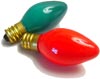
A string Christmas lights (enough so that each young person can receive a light bulb). On most light sets, if one bulb is removed the circuit will be broken and none of them will work.

Activity
One by one, have each young person place his or her light bulb in the string and share one special thing about himself or herself. This could be a feeling about the Christmas season, or a feeling about being a part of the youth group. When everyone’s bulb is in place, the string will light up.

Application
All of the bulbs have to be in place for the lights to shine forth with their beauty!
Everyone is important in the body of Christ. Christ was born as a gift to everyone.

Variations
Decorate a Christmas tree with strings of popcorn and cranberries. Supply construction paper, glitter, glue, markers and magazines. Have the kids each make an ornament that describes themselves. For example, they could use glitter and glue to write their name and cut out magazine pictures such as jogging shoes, books, puppies and food. Make hangers for the ornaments out of pipe cleaners.

Affirmation
Follow up this lesson with an affirmation idea. Give each person 10 pieces of peppermint candy. Instruct the group members to mingle and give a piece of candy to 10 different individuals, telling them what they appreciate about them. Tell the students to continue until all of candy has been distributed.

MORE IDEAS? See “Creative Object Lessons”
200 page e-book that explains everything you need to know when planning your very own object lessons. It contains 90 fully developed object lesson ideas and another 200 object lesson starter ideas based on Biblical idioms and Names / Descriptions of God.
Learn More…

Get Creative Youth Ideas: "Christmas Collection" ebook Christmas Collection
Games and Activities helping youth discover the Reason for the Season.

Get more than 200 creative ideas for planning a Youth Christmas celebration or Christmas Party party. You can immediately download my best Christmas Icebreakers, games, illustrations, Christmas activity ideas AND MUCH MORE in a useful ebook!

=> Tell me more about the Christmas Collection

Advent Alphabet

ornaments1.jpgWhat do sand, trees, money, pearls, wheat, and mustard seeds have in common? Jesus used them all as tangible symbols or object lessons to help his disciples to understand and remember intangible truths. The Master Communicator often attached deeper meanings to common things and objects.

Alphabetically listed are 25 items commonly associated with Advent and Christmas, one object lesson per day starting December 1, to help your family attach deeper spiritual insight to traditional customs and apply what they have learned to everyday life.

Aromas (December 1) 
Identify Christmas scents by smelling small bags containing apple slice, bayberry candle, clove, ginger, peppermint, or pine cone. Place fresh evergreens around. Add spices, (rosemary, laurel, bay, sage) to wreaths and greens. Make a pomander ball by pressing whole cloves into an unpeeled orange and hanging it as a symbol for Christmas fragrances.

Bells (Dec. 2)
Sing “Jingle Bells” while each family member shakes the rhythm with a bell. Make a set of bell chimes by filling water glasses unequally and see who can tap out a recognizable melody with a spoon. Hang bells as the symbol.

Candles (Dec. 3)
To reinforce the symbolism of light use Christmas candles. Line a driveway or walk with luminaries (candles set in open paper lunch bags half filled with sand) Set votive or electrical candles in windows. Make a candle carving by tracing a design onto a thick candle and shaving away the wax with a knife. Eat dinner by candlelight. Take a few quiet moments of meditation by candlelight.

Decorations (Dec. 4) 
Go out to view decorations and vote on the one which best communicates the true meaning of Christmas. Sing carols about decorations between stops (“Deck the Halls” “Jingle Bells”). Begin to hang your Christmas decorations. Create personalized paper placemats with drawings, stickers, dry transfers, markers, and paints and cover them with plastic wrap or clear shelf adhesive to preserve them.

Eating (Dec. 5) 
Use a cookie as today’s symbol. Make some wassail. Wassail means “be well” so drink each cup as a toast to each other’s health. Make plates of cookies as gifts and watch your children enjoy the true meaning of Christmas – giving to others.

Friends (Dec 6) 
Prepare a conversational activity and snacks for friends who drop in. You might set up a table with a jigsaw puzzle (500-1000 pieces) to try to complete by Christmas with the help of friends. It’s appropriate that Jesus’ first friendly visitors were shepherds for he became the good shepherd. Hang candy canes, shaped like a shepherd’s crook.

Greetings (Dec 7) 
Place Christmas cards received in a basket on the dinner table and take turns reading one at each meal. Share happy memories of the senders and include them in prayers. Make a “Good News paper” about Jesus’ birth, including a birthday announcement, copy of Caesar’s census decree, interview with King Herod, a notice about the free concert by the Herald angels in pastures near Bethlehem, etc. The good news of Christmas is that a Savior has been born.

Home (Dec. 8) 
People without a home or away from home tend to feel more lonely at Christmas time. God understands because his Son was away from home for the first time on Christmas Eve. Joseph and Mary spent their first Christmas in Bethlehem, about 60 miles from their home in Nazareth (a 3 day trip). Having no friends or relatives with whom to stay, and no advance reservations at an overbooked hotel, they spent Christmas in a stable. The first home of Jesus, our Spiritual Bread of Life, was Bethlehem which means “house of Bread” Sing “O Little
Town of Bethlehem as your family prayer.” Symbol: house.

Individuals (Dec 9) 
The ultimate meaning for Christmas is personal, the need for each person to receive God’s gift of forgiveness and eternal life. As a symbol use a picture frame with the child’s picture. Read “A Christmas Carol” by Dickens to focus on the needs of others.

Jesus (Dec. 10) 
Hang a cross to symbolize Jesus. Have a Birthday celebration for Jesus with a star shaped cake. Wrap a toy and donate to a charity as a gift to Christ.

Kin (Dec. 11)
Christmas is a time to be with family. Hang a family symbol or photo. Talk about Jesus’ family. Do something together as a family.

Love (Dec. 12) 
Hang a heart as the symbol. Make a large red heart and write on it the qualities of true love from I Cor. 13

Music (Dec. 13) 
Hang a musical note as a symbol. Invite friends to join you in singing carols for shut ins or seniors. Play Christmas music around the house.

Nativity (Dec. 14) 
Set out a nativity scene. Add pieces daily explaining their relationship to the manger story. Leave the manger empty with a box of straw. When children do good deeds let them place a piece of straw in the manger with the goal of having it filled for Christmas when you place Jesus in it.

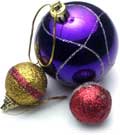
Ornaments (Dec. 15) 
Help children make personal ornaments. Make or purchase one cross ornament as a reminder that Jesus’ cradle was the prelude to the cross.

Present (Dec. 16) 
To focus on giving gifts or presents: help someone less fortunate through donations. Help each person choose and wrap a symbol of an intangible gift for Jesus (i.e. a
heart for love, a clock for time, etc.)

Questions (Dec. 17) 
Hang a question mark on the tree. Have a quiz on Christmas facts, a spelling bee on Christmas words, etc. The wisemen asked a question in Matt 2:2 seeking Jesus to worship him.

Red (Dec. 18) 
How many red Christmas items can you name? Hang one as a symbol. Red symbolizes the blood of Christ, as well as, red holly berries and poinsettia leaves which are vivid reminders of life in a lifeless winter.

Stocking (Dec. 19) 
Renouncing wealth to serve as a church leader, legend says Saint Nicholas gave his inherited wealth away by putting gold in stockings hung to dry.

Tree (Dec. 20) 
Establish some family traditions based around the Christmas Tree. Explain how three trees explain the Christmas story – Adam lost access to the tree of life by eating from the forbidden tree but Jesus reopened the way to the tree of life by his sacrifice on the cross (itself a tree).

Unwrapping (Dec. 21) 
Use an open box to symbolize the unwrapping of gifts.

Vacation (Dec. 22) 
Create a vacation calendar and on it creatively plan and build anticipation as to how holidays can be spent.

Wreath (Dec. 23) 
See who can count the most circular Christmas items around the house. A wreath is like Jesus in that it never ends.

Xmas (Dec. 24) 
Christmas literally means “celebration of Christ” The X represents the first letter of Christ in the Greek alphabet. Hang a Chi-Rho cross as a symbol, the first two letters of Christ.

Yule (Dec. 25) 
Yule is another name for the Christmas Season. You might use a yule log as a symbol. On Christmas morning ask children to stay in bed until they hear Christmas music playing. No Christmas presents are to be opened until everyone is present. Share a worship time before opening gifts. Do at least one fun activity as a family. Make Christmas dinner special with a centerpiece and lighted candles.. Make Christmas place cards with Scriptures to be read. See which family members can share the significance of the 25 ornamental symbols hung this month.

Condensed and adapted from “An Advent Alphabet” by
Karen and Terry Hall, Moody Magazine, December 1986


 

MORE IDEAS? See “Creative Object Lessons”
200 page e-book that explains everything you need to know when planning your very own object lessons. It contains 90 fully developed object lesson ideas and another 200 object lesson starter ideas based on Biblical idioms and Names / Descriptions of God.
Learn More…

Legend of the Candy Cane

Object
A candy cane for each child.

The Lesson
Candy Canes are everywhere. They are used as decorations on Christmas trees and are one of the most popular of all Christmas treats. I have heard several stories about the history and meaning of the candy cane. I don’t know if they are true, but I do think that the candy cane can teach us a few things about the true meaning of Christmas.

J
First of all, if you look at the candy cane it looks like the letter J. Jesus starts with the letter J, so that should remind us of Jesus and help us to remember that Christmas is Jesus’ birthday.

Shepherd’s Crook
If you look at the candy cane like this it looks like a shepherd’s crook. The shepherd used his crook to keep the sheep from wandering away from the flock and getting lost or eaten by a wild animal. The Bible says, “The Lord is my shepherd.” The candy cane should remind us that Jesus is our shepherd and he will keep us from wandering away and getting lost or hurt. (John 10:11)

White
The candy cane is mostly white. White is a symbol of purity. That should remind us that Jesus was the spotless Lamb of God and that because he came to be the sacrifice for our sin, we can become as white as snow. (I John 1:7)

Red Stripes
As you know, the candy cane has three red stripes. The Bible tells us that before he was crucified, Jesus was beaten with a whip which made blood-red stripes across his back. The Bible says that we are healed by those stripes. The stripes on the candy cane should remind us that Jesus suffered and died, so that we can have everlasting life. (Mt 26:28)

Sweet
The sweetness of the candy cane reminds us that God Loves us and wants us to enjoy the many gifts He has given us — especially the gift of His Son, who came into the world on the first Christmas to save us. (John 3:16)

Summary
To many people, the candy cane is a meaningless decoration seen at Christmas time or just a piece of candy to be eaten and enjoyed. I hope that this year, every time you see a candy cane, you will be reminded of the true meaning of Christmas.

Scripture
Mark 12:13-17 Mark 12:41-44

Get Creative Youth Ideas: "Christmas Collection" ebook Christmas Collection
Games and Activities helping youth discover the Reason for the Season.

Get more than 200 creative ideas for planning a Youth Christmas celebration or Christmas Party party. You can immediately download my best Christmas Icebreakers, games, illustrations, Christmas activity ideas AND MUCH MORE in a useful ebook!

=> Tell me more about the Christmas Collection


MORE IDEAS? See “Creative Object Lessons”
200 page e-book that explains everything you need to know when planning your very own object lessons. It contains 90 fully developed object lesson ideas and another 200 object lesson starter ideas based on Biblical idioms and Names / Descriptions of God.
Learn More…

Wonderfully Created

sheriff.jpg
Materials

Obtain various tools and accessories associated with different occupations.

Some possibilities include:
fireman’s hat-fireman, police badge-policeman, sheriff badge-sheriff, cook’s beater-cook, baker’s hat-baker, basketball or sport’s equipment-athlete, axe-woodsman, paintbrush-artist, stethoscope-doctor, briefcase-businessman, driver’s license-driver or taxi driver, trowel-bricklayer, shovel-gardner, Bible-pastor, hammer-carpenter, Microphone- singer or speaker, telephone-secretary, bow tie-waiter, knife-butcher, ETC.

Activity
Have participants match the items with the occupation.

Discussion
1. What do you / did you want to be when you grow/ grew up.
2. Does God have a personal and specific will for each person’s life?
3. Does he have a detailed blueprint for our life?
4. How much leeway do we have in submitting our personal choices?
5. Is everything predestined?
6. Does it include every detail relating to my life? If so, how do we discover it?

Scripture
Psalm 139:15. Before you were even a baby, God knew you and what you would become. God intimately knows us. He knows our thoughts, words, and deeds (v7-12). Verse 16 says God planned all your days, all your life, before you were ever even born. He had a plan for you before you even existed.

Closing
End by discussing various things that Christians can do. Discuss the person each of us can become. Talk about the different roles in the church and how God might use some of them to accomplish these roles.


MORE IDEAS? See “Creative Object Lessons”
200 page e-book that explains everything you need to know when planning your very own object lessons. It contains 90 fully developed object lesson ideas and another 200 object lesson starter ideas based on Biblical idioms and Names / Descriptions of God.
Learn More…

Baby Pictures

Materials
Obtain baby pictures of different people in the groups. Allow participants to attempt to identify the various people by their baby pictures.

Application
Parent’s have great expectations for their children. Every child is a bundle of potential. As they grow and mature, they discover their abilities and ultimately their place in life.

A youth group, in many ways is like a baby. It starts out small, and it doesn’t know its abilities or where it fits into God’s picture, but as it grows and matures, God has a plan for it. If it a baby did not grow and mature we would be very concerned, but we seem content that our youth group never grows.

We must realize, a youth group cannot survive separated from the family of God any more than a baby can survive separated from it’s family. And as a baby grows, it’s identity is shaped by its family.

Discussion
1. So where does the group fit into the family of God? In what ways can it grow and mature? What is it’s potential? What is God’s plan for it?”
2. How can you apply this object lesson to your personal spiritual life? In what areas have you grown a lot? In what areas is your spiritual growth been stagnant? How would you describe yourself as a Babe in Christ / Child of God?

Variation
This object lesson could be used for care groups, just substitute “care group” for “youth group.”

MORE IDEAS? See “Creative Object Lessons”
200 page e-book that explains everything you need to know when planning your very own object lessons. It contains 90 fully developed object lesson ideas and another 200 object lesson starter ideas based on Biblical idioms and Names / Descriptions of God.
Learn More…

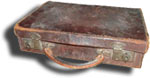
Briefcases

briefcase.jpg
Materials

1. As many smart-looking black executive brief-cases as you can borrow; inside each one place a clear plastic bag with something unsavoury in it, such as a squashed tomato, an old sandwich or a broken biscuit; molded bread, curdled milk.
2. A well-worn, old-fashioned brief-case; inside this case put a wallet or some cash. Alternatively you can use a wallets or purses.

Object Lesson
1. Talk about executive brief cases and the image that they convey, pretending that you have always wanted one. Compare the smartness of the cases you have borrowed and take a walk with each one, looking very important and pleased with yourself. Make fun of the old briefcase.

2. Open each nice executive briefcase and express horror as you reveal the contents.

3. Pick up the old-fashioned brief-case and discuss how this old thing could not possibly contain anything interesting or worthwhile. Open it and take out the money with complete amazement. Who would have thought? Something valuable inside an old case like this?

Applications
1. I sam 16 – God does not judge by appearances, what is on the outside, but by the heart – what is on the inside.

2. 2 Kings – In the Northern Kingdom, God was concerned with the internal disobedience of the Isrealites. He was concerned with the fact that they did not put away their idols. For Isreal, their new golden calves were like the executive briefcase- Looks great, but they led to the decay of Israel. They left corruption and disobedience in their hearts. Their faith had become old, seemingly forgotten and they did not believe they could find anything worthwhile in it.

3. Many of todays youth view Christianity in the same way as the old briefcase. They are raised in a high tech, ever changing world. Whatever is new, sleek, and attractive is in. Whatever is old is out. For many of them, their faith has become like the old ragged briefcase. They do not believe that anything worthwhile can be found in it. Yet if they were willing to really look into it they would discover that inside it lies the greatest treasures. Just because something is old doesn’t mean it isn’t of great worth. Like Israel many of today’s youth run after every new fad and exciting new discovery only to realize later that they were hollow if not destructive.

MORE IDEAS? See “Creative Object Lessons”
200 page e-book that explains everything you need to know when planning your very own object lessons. It contains 90 fully developed object lesson ideas and another 200 object lesson starter ideas based on Biblical idioms and Names / Descriptions of God.
Learn More…

Calling God

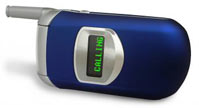
mobilephone.jpgMaterials
Mobile Phone

Activity
1. As you walk into the room, talk loudly on your mobile phone as if you are talking to a friend.
2. Talk about your plans for the day, the things you need to do, ask for advice, ask for some help, etc.. all as if you are simply talking to a friend.
3. End your conversation with, “I have to go. I have some friends here waiting on me”

Discussion
1. How many of you like to talk to friends on the phone?
2. What kinds of things do you talk about?
3. How many of you have a mobile phone?
4. Guess which friend I was talking to?
5. Actually, I was talking to God.

Applications
Talking to God (prayer) is different than talking on a mobile phone.
When talking to God:
1. God is never out of range.
2. We never “lose the signal”
3. The battery never runs dead
4. We never run out of minutes
5. We don’t have to remember his number.. just talk!


MORE IDEAS? See “Creative Object Lessons”
200 page e-book that explains everything you need to know when planning your very own object lessons. It contains 90 fully developed object lesson ideas and another 200 object lesson starter ideas based on Biblical idioms and Names / Descriptions of God.
Learn More…

Pumpkin Seed Toss

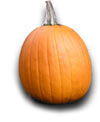
pumpkin.jpgMaterials
1. Several Carved pumpkins with different size mouths or with different size holes in the top.
As an alternative, have a watermelon seed toss on a hot summer afternoon. Cut off the ends of the watermelon. Hollow it out and then pit it back together with toothpicks. Carve funny faces in the watermelons as you would a pumpkin.
2. Small Bean Bags (Referred to as Pumpkin seeds / or watermelon seeds)
3. Place the pumpkins on a bale of hay or cloth covered table some distance from the participants.
4. Choose one of the discussion ideas below… Choosing only one will keep everyone focused and create a more powerful object lesson.

Activity
Each Youth / Child is given 5 chances to try to toss the pumpkin seeds into the pumpkin. Each pumpkin, depending on the size of the hole is worth different points.

Discussion Idea #1: Targets
1. Why did you choose your pumpkin target?
Some people chose the smaller pumpkins because they were worth more. Others chose the pumpkins with the larger mouth because they were an easier target.
2. When it comes down to real life, do you choose your targets based on value or upon which is easier?
3. What are your targets in the Christian life? Are they easy? Why do you value these targets?

Discussion Idea #2: Your Mouth
1. In this game you were judged by your ability to toss an object into a mouth. But in God’s kingdom we are not judged by what goes into our mouths, but by what comes out of our mouths.
2. What do your words reveal about you?
3. When is it more valuable to be a “big mouth”? To keep your mouth closed?
4. What does the Bible say about our words?

Looking for some icebreakers for your party or event? My eBook, “IceBreakers Ahead: Take It to the Next Level” found at http://www.creativeicebreakers.com
not only provides 52 of the most world’s popular group icebreaker activities, but also includes life changing lesson ideas and questions to smoothly transition into discussions about issues common to most groups.

MORE IDEAS? See “Creative Object Lessons”
200 page e-book that explains everything you need to know when planning your very own object lessons. It contains 90 fully developed object lesson ideas and another 200 object lesson starter ideas based on Biblical idioms and Names / Descriptions of God.
Learn More…

Get Creative Youth Ideas: "Holiday Collection" ebook Holiday Collection
Games and Activities in Celebration of common Holidays.

Creative Holiday Ideas has over 300 pages of ideas to help you plan your next New Year’s Day, Valentine’s Day, Mother’s Day, Father’s Day, Halloween or Fall Festival, and Thanksgiving event. If you’ve ever wondered what you’re going to do for all these holidays and how you’re going to do it, this resource is for you.

=> Tell me more about the Holiday Collection