
 A Mentor is one who holds up a Mirror for Reflection. What is reflected is the life of the protégé, not the brilliance of the mentor. There is no greater mistake than to mold others into one’s own image. The mentor’s job is not to shape, but to facilitate the discovery process. Wisdom is not imposed, it is portrayed. Character is not taught, it is provoked and inspired. He doesn’t teach a person skills, but shows a person a life. It’s a misconception that a mentor’s task is to do something for another person by teaching, correcting, or otherwise giving something the mentor possesses, something the protégé lacks. That’s Coaching. Mentoring is more “how can I help you” rather than “what should I teach you.” Its not something the mentor does, but helping the protégé to do something. Successful mentoring is not determined by what a mentor does, but by the responsive of the protégé to the image he sees as the mentor holds the protégé’s life up for personal reflection. Responsibility and initiative for growth lies in the reponsiveness of the protégé, not the mentor’s.


Get Help on Your Youth Sermons
Creative Sermon Ideas
This 100 Page e-Book Includes All The Help You Need To Prepare Powerful, Life-Changing Youth Sermons That Will Turn Your Preaching Around And Make Your Youth Sit Up And Listen! Includes 7 Complete Sermons.
–> I want More Youth Sermon Ideas…
 “If I could see further than others, it was because I stood on the shoulders of giants.”
 The mentor carves out and helps to create a space where learning can occur. It has boundaries of confidentiality, structure, and guidance, but is open. It is a safe place where both can be vulnerable with their questions, struggles, emotions and doubts. There is space for ideas, curiosity, wonder, and joy. It is a space in which the mundane, the ordinary can be a container of grace. It is a space in which the mentor is given increasing permission to ask the tough questions that will penetrate the masks most of us wear. It is a space where the protégé has no fear to confess failings and progress, to entrust the secrets of his heart, and reveal all his plans.
 At one time, Andrew Carnegie was the wealthiest man in America. He went there from his native Scotland when he was a small boy, did a variety of jobs, and eventually ended up as the largest steel producer in the United States. At one time he had 43 millionaires working for him. In those days a millionaire was a rare person; conservatively speaking, a million dollars in Carnegie’s day would be the equivalent to at least $20 million today. A reporter asked Carnegie how he had managed to hire 43 millionaires. Carnegie responded that those men had not been millionaires when they started working for him, but had become millionaires as a result. The reporter’s next question was: “How did you develop these men to become so valuable to you that you have paid them this much money?” Carnegie replied: “Men are developed the same way that gold is mined. When gold is mined, several tons of dirt must be moved to get an ounce of gold; but one doesn’t go into the mine looking for dirt – one goes in looking for the gold.”
 As a sensitive microphone picks up smallest sounds and amplifies them, a mentor listens to the smallest details of life and helps the protégé to hear them. A mentor is primarily a listener. The best mentor is one whose “own ear is turned toward the wisdom of others, who is always open to listen, to hear, and to transform life.” He is to attentively observe the protégé with love, compassion, genuine concern and interest. He is to have a vulnerablity in which he says “all of me listens to all of you” The mentor must listen carefully to the protégé, his story, and his needs. He must also listen to what is not said and how things are said. He must also listen to his own heart and instincts as a mentor, the stirrings, consonance, and dissonance. When the protégé is “listened to, probed, encouraged, challenged, and helped to hear, then the mentor has come alongside to help him.”
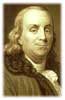 Benjamin Franklin once said, “There are two ways to acquire wisdom; you can either buy it or borrow it. By buying it, you pay full price in terms of time and cost to learn the lessons you need to learn. By borrowing it, you go to those men and women who have already paid the price to learn the lessons and get their wisdom from them.”
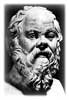 It was Socrates who mentored Plato, who mentored Aristotle, who mentored Alexander the Great. Socrates described himself as, “a mid-wife assisting the labour of the mind in bringing knowledge and wisdom to birth”.
 Let your protégé shine. An effective mentor is able to let a protégé have a few deserved moments in the sun for a job well done. The best way to make people shine is to let them be the gems they are and just provide a good setting and a little polish.
 In the eighth century BC, the Greek writer Homer wrote an epic poem describing Odysseus’s adventures during his 10-year voyage home after the Trojan War. While he was gone, he entrusted the care and education of his beloved son, Telemachus, to his faithful friend Mentor. Almost three thousand years later that man’s name has come to mean a wise and trusted counselor.