
Category Archives: Object Lessons

Object Lessons: Ken’s favorite word pictures to teach Biblical principles and stir the imagination of your youth. They also make great Children’s sermons. Christ often used them in his teaching, using common objects like a mustard seed, a fig tree, a grain of wheat, a drink of water, stony soil, and more.

Growing in Godliness – 2 Peter 1:1-11

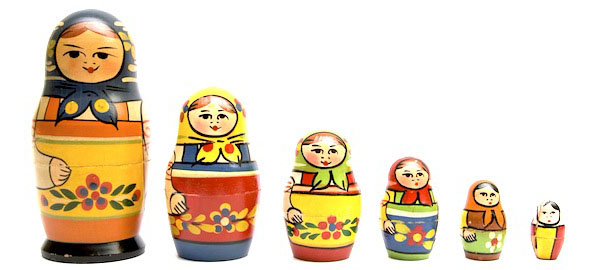
matryoshka dollDescription

This Object Lesson for youth, uses a nested Russian doll to illustrate our growth as Christians.

Materials

A Matryoshka doll (ideally with at least 8 nested dolls)
A Russian Matryoshka doll is a set of hollow wooden dolls which split open into a top and bottom half to reveal additional dolls of decreasing size each placed one inside the other. The outer doll is traditionally a woman, as reflected in the name which means “little matron”. The inner dolls can be male or female. The innermost doll, made from a single piece of wood is typically a baby. While they are smooth rounded wooden carvings, the painting of each doll can be very intricate and often follows a theme.

Scriptural Background

  • Approximate Date: 63-68 A.D. – shortly after 1 Peter. Nero’s persecution began in 64 A.D., and Peter was martyred approximately 67 A.D.
  • Place of Writing: Babylon
  • Three-Fold Purpose: 1) Encourage growth, 2) To correct against false teaching, 3) Promote holy living.
  • Theme and Key Word: Knowledge.
  • Key verse: 3:18 – “But grow in the grace and knowledge of our Lord and Savior Jesus Christ. To Him be glory both now and forever! Amen.

Chapter 1 has been labeled “The Bible’s Arithmetic Chapter”

  • Multiplication – “Grace and peace be multiplied to you … ” (1:2)
  • Addition – “Add to your faith … ” (1:5-7)
  • Subtraction – He has been cleansed from his past sins … ” (1:9)

Outline:

  • 2 Peter 1:2-3 God’s Provision – Describes God’s provision and the believer’s enablement
  • 2 Peter 1:5-7 Our Responsibility – Describes our human responsibility of seeing to it that the various Christian virtues are included in our lives.

“The divine nature works at its best efficiency when the believer cooperates with it in not only determining to live a life pleasing to God, but definitely stepping out in faith and living that life.” ~Kenneth Samuel Wuest

Key Lessons

1:5-7 – Peter begins with “for this very reason (because you are a partaker of the divine nature) make every effort (pareisphero)” – that is, “add or contribute on your own part” the necessary actions to confirm your profession of faith by godly living. The verb rendered “add” (epichoregeo – “to supply in copious measure”) is not simply to add one virtue to another. Rather, the meaning is to develop one virtue in the exercise of another, with each new grace springing out of and perfecting, or tempering the other.

  • In the exercise of faith, believers are to generously provide goodness.
  • In the exercise of goodness, believers are to copiously provide knowledge.
  • In the exercise of knowledge, believers are to lavishly provide selfcontrol.
  • In the exercise of self-control, believers are to plentifully provide perseverance.
  • In the exercise of perseverance, believers are to abundantly provide godliness.
  • In the exercise of godliness, believers are to bountifully provide brotherly kindness (philadelphia).
  • In the exercise of brotherly kindness, believers are to generously provide agape love.

1:8-9. Peter’s promise is that those who possess these virtues and build on them will grow spiritually and will not be idle in pressing toward a fuller knowledge of the Lord Jesus Christ. Those who do not are “spiritually nearsighted”, having forgotten his initial salvation experience.

1:10-11. Verse 10 is the key to this section. The believer will “make his calling and election sure”, that is, he will satisfy himself that he is saved, or confirm his salvation by his godly living. There is some debate of the security of the believer, which some say is objective and cannot be disturbed, and the subjective experience of knowing and feeling you are saved because you are “doing your part” in allowing the Holy Spirit to produce the kind of virtues characteristic of a Christian.

Icebreaker Questions to Stimulate Discussion

  • What did you want to be when you grew up?
  • What are your current dreams for the future? What kind of person do you want to be? How do you want your life to be remembered by others?
  • What are some of the qualities you admire in others? Other youth? Parents? Adults? Leaders? Famous people?
  • If you had a magic lamp with a genie and he could grant you three personal qualities, what would you wish for?

Scripture: 2 Peter 1:1-11

In 2 Peter 1 Chapter 1, Peter talks about our growth as Christians. This growth begins with faith and culminates in love. Like the innermost Matryoshka doll we begin as babes in Christ. We are spiritually born again through saving faith in Christ. But to live life forever as a baby would be a tragedy. Peter says that if we fail to grow, it is akin to being nearsighted and blind and forgetting that our sins have been forgiven.

This list of qualities are things that are added to our godly character as we grow in Christ. Each new quality does not replace the one before it, but adds to it. These are not things that we possess then give up, as a child outgrows old clothes. These qualities are not marks on a growth chart, but things that we hold inside our hearts and that we carry forward with us as we continue to mature in Christ.

Here’s the list:

  1. faith
  2. goodness
  3. knowledge
  4. self-control
  5. perseverance
  6. godliness
  7. brotherly kindness
  8. love

NOTE: As you mention each quality, add a new shell to the inner doll so that it continues to grow in size. “As we add each one, we become more effective and productive. ”

Take it to the Next Level

Questions for discussion

  • How do you define each quality/ characteristic?
  • How does each character quality relate to the one before it?
  • Why is each quality important to living a godly life as a youth?
  • For each of these qualities, what would the effect be if a Christian youth was missing that quality in his or her life?
  • What are some of the possible ways that each quality would be expressed in the way a youth lives his or her life? Are these qualities something we possess or something that we do?
  • For each quality, what are some things youth can do or practice the make that quality part of who they personally are?
  • As we grow in Christ, there is always a combined effort with God, to live the Christian life. We have to make decisions and choose to act, but God empowers us, guides us, and provides for us. What are the things that God does for us according to this passage?
    1. Gave us faith through Christ (2 Peter 1:1)
    2. Grace, Peace and Knowledge of God and Christ (2 Peter 1:2)
    3. Everything we need for life and godliness (through his divine power) (2 Peter 1:3)
    4. Called us (2 Peter 1:3)
    5. Knowledge of God (2 Peter 1:3)
    6. An example – God’s Glory and Goodness (2 Peter 1:3)
    7. Precious Promises (2 Peter 1:4)
  • What are some of the promises of God that might help youth to grow in each of these qualities?
  • How do the actions of God listed in this passage apply to each of these qualities that we grow into as Christians? How do they help us to live life as a youth to reflect these character traits?
  • Why has God given us all these things?
    1. To participate in the divine nature (becoming Christlike) (2 Peter 1:4)
    2. To Escape the corruption of the world caused by evil desires (2 Peter 1:4)
    3. To be effective and productive in our walk (2 Peter 1:8)
    4. To reinforce our faith (2 Peter 1:10) so that we are secure in faith – know that have been saved.
    5. So that we will not fail (2 Peter 1:10)
    6. To be richly welcomed into heaven (2 Peter 1:11)

Application to Youth

  1. What are some ways you can practice these as a youth?
  2. When you look at this list of qualities, which ones do you possess and practice most? Which are most lacking in your life? Which do you find most difficult?
  3. What are some ways you can express these qualities this week as you encounter others at school, at home, or in church?
  4. How do these qualities prevent us from being in effective and unproductive?
  5. How can those in the youth group support each other and encourage one another toward growth in these areas?
  6. What can the youth ministry and parents do to help you to grow?
  7. If you were to have all these godly qualities in increasing measure, how would it effect your life, your testimony, your actions?
  8. What are the benefits of pursuing godliness?

Closing Prayer
Go through each of the qualties in prayer with God. Ask him to reveal the truth about these qualities in your own life. Ask him to make clear opportunities to express your faith to through these qualities as a living testimony to Christ.

MORE IDEAS? See “Creative Object Lessons”
200 page e-book that explains everything you need to know when planning your very own object lessons. It contains 90 fully developed object lesson ideas and another 200 object lesson starter ideas based on Biblical idioms and Names / Descriptions of God.
Learn More…


St Patrick’s Day

Description
You may want to use this lesson guide in a Children’s sermon or for a youth activity for St. Patrick’s day. The significance of St Patrick’s day is not in the traditions associated with it today, but in its remembrance of a forgiving teenager who was sold into slavery and escaped only to return to the country where he had been a slave, in order to bring the people there to the love of Christ.

Resources

Bring in a large three leafed clover (Shamrock) or clover stickers for each of the youth or children. You might also wear something green, or even let the youth have a taste of some traditional Irish food like corned beef and cabbage.

NOTE: Cabbage was traditionally served with Irish bacon, instead of corned beef. Corned beef is apparently an Irish American tradition started at the turn of the century because families could not afford Irish Bacon.

Introduction

St Patrick’s Day is March 17, on the day of his death, and has been traditionally associated with all things Irish and a lucky clover. At some point Leprechaun’s and rainbows with a pot of gold at the end somehow were included in the mythology. Like many holidays, St. Patrick’s day began as a religious holiday to commemorate his death, but the original purpose and traditions have been replaced with something almost entirely unconnected to the original celebration. Many of the details of his life are disputed, but we can be certain that he did preach to the unsaved in Ireland and placed a major role in the evangelization of a very large number of people.

Background

St Patrick was the bishop to Ireland and he lived in a time just before Christianity became the mainstream religion in the Roman Empire, sometime around AD386 – AD460.

His faith journey wasn’t an easy one. Like Daniel and Joseph of the Bible, he was captured by pirates and sold into slavery when he was only teenager (16 years old). Life was difficult for slaves. Not only was life difficult, but he was dragged from his home and sent into slavery in another country without his family. Tradition says that as a slave in Ireland he was forced to be a shepherd, herding sheep and pigs. His father had been a church deacon, and his grandfather a clergyman, but by his account, he only turned to religion and prayed out to God when he was in captivity. Conditions were harsh and his only comfort was what he received through praying constantly. After six years as a slave he escaped by boat to Britain. He traveled the 200 miles to the ocean and according to some stories either stowed away or booked passage. The boat landed not far from where his parents lived, and one would expect a joyful reunion and for him to remain with his parents. Instead of staying though, he traveled to France to study and become a priest. Because of his captivity, he never received any formal education and lacked the eloquence the other students had.

While studying for ministry, he received a vision from God to return to Ireland as a missionary. He only took the name Patrick when he later became a Bishop. It was a great act of forgiveness that he returned to the people who enslaved him in order to share with them the love of Christ.

Unlike most Bible teachers and preachers of the time, Patrick didn’t speak very well nor deliver fine sermons. It wasn’t his rhetoric that won the people over. He had the rare ability to use common, everyday life experiences to explain difficult theological concepts – much like Jesus did and the apostle Paul after Him. That’s pretty much why St. Patrick’s Day is represented by a shamrock. According to legend, Patrick would take up a three-leaf clover and ask, “Does it have one leaf or three?” Those listening would respond, “both.” Patrick then explained, “And so it is with the Trinity – Father, Son, and Spirit are one God. Three persons in one.” However, that alone wasn’t enough to bring his people to faith in God either.

Ironically, what he lacked in school, he more than made up for by what he learned through his upbringing of trials and adversity. And that was a desperate dependance on God through prayer. This was more than any theological school could teach him and it was instrumental in his success as a minister of God. It was that and the demonstration of his faith through his actions and prayer life that convinced so many to believe in God.

St. Patrick wasn’t just a minister for God inside the 4 walls of the church. He was outspoken about the practice of slavery in his country as well. His repeated pleas to the Christian leadership in Britain were ignored but he persisted and like the widow in Jesus’ parable, was rewarded – with the decision to end the slave trade in Ireland.

Take It to the Next Level

There’s much we can learn from the life of St. Patrick.

If you were captured and put into slavery as a teenager, do you think you might feel called to return to those who enslaved you and work for the salvation of their souls? I’m sure we’ve had at some point harbored unforgiveness in our hearts for less! Is forgiveness easy or difficult? Why is forgiveness an important concept to Christians? Is there someone you need to forgive today?

Sometimes we’re so caught up with discussing God in church that it never results in DOING what Jesus really called us to do. Jesus never called us to go to church on Sundays, He never called us to play music in the worship team, He never called us to serve Him as ushers. First and foremost, Jesus called us to go and make disciples, to love God with all our hearts, and to love His people. When all is said and done, do we live out our faith in the world “out there”? Are we sharing about Christ to our friends and families who have yet to know Him? Are we speaking out against the social injustices that we see? Is there a school bully you need to confront – not with your fists – but with the love of God? Is there someone who feels lost, hurt, depressed and rejected that needs to hear about the love a Savior has for them?

Let’s commit to being real St. Patricks today. As we remember and honor the man that was truly a follower of Christ, let us celebrate by putting our feet to motion and our hands to action for a world that has yet to hear or know about the Living God.

MORE IDEAS? See “Creative Object Lessons”
200 page e-book that explains everything you need to know when planning your very own object lessons. It contains 90 fully developed object lesson ideas and another 200 object lesson starter ideas based on Biblical idioms and Names / Descriptions of God.
Learn More…


Get "Creative Sermon Ideas" eBook

Get Help on Your Youth Sermons

Creative Sermon Ideas
This 100 Page e-Book Includes All The Help You Need To Prepare Powerful, Life-Changing Youth Sermons That Will Turn Your Preaching Around And Make Your Youth Sit Up And Listen! Includes 7 Complete Sermons.
–> I want More Youth Sermon Ideas…

Get Creative Youth Ideas: "Easter Collection" ebook Easter Collection
Games and Activities in celebration of Easter.

Get more than 80 creative ideas for planning a Youth Easter celebration or Easter Party. You can immediately download my best Easter Icebreakers, games, illustrations, Easter activity ideas AND MUCH MORE in a useful ebook!

=> Tell me more about the Easter Collection

Christmas Connect-the-Dots

connectdots.jpg

Description
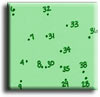
Throughout the Bible God gave more than 300 prophecies that foretold the coming of Christ and what he would do. Looking back now, it’s easy to tell how to connect all the references together to get a picture of the birth of Christ. Use this connect-the-dots object lesson as a discussion starter to discuss some of the primary prophecies related to the birth of Christ being fulfilled.

Materials

  • Find a connect-the-dots image with a Christmas Theme. You can find easily by searching Google. Click here to Find One.
  • You can print a copy for each youth or simply show it on a powerpoint slide or OHP transparency if you still use those. This way everyone can see what happens as you begin to connect the dots.

Activity

  • Show the Christmas connect-the-dots puzzle to the youth.
  • Ask the youth if they believe that once all the dots are connected if they believe a Christmas picture will appear?
  • If all the dots are connected what do you believe will appear?

Applications

Doing a connect-the-dots puzzle is a little like what happened with the birth of Christ.

As you’re explaining, start connecting the dots of the puzzle.

  • You begin by believing that something special will appear. You might have a general idea what will appear, but you don’t really know all the details until everything is completed. You believe that there is a designer to everything on the page and if you just connect the series of clues you will be rewarded.In many ways, this is similar to what happened in Israel before the birth of Christ. God had given over 300 prophecies of a series of events that would mark the appearance of the Messiah. Even thought the Messiah had not yet appeared, there were many who believed that God would reveal what he promised. People had connected some of the events like the magi, but everything was not yet clear.
  • If you don’t connect the dots correctly, or if you decide to stop connecting them, you’ll never see the full picture the artist has designed. There were some people, that even when the Messiah appeared, missed him. Some were connecting the dots in expectation that the Messiah would be a literal worldly king and Jesus did not fit the figure they expected.

The same thing happens to many people today

  • Many people miss the Birth of Christ at Christmas because they make the wrong connections. Christmas is not about Santa Claus, shopping malls, and wonderful food. These things are nice, but the true reason for the season is to celebrate the birth of a Saviour.
  • Many people believe that there is a greater power, a design to the universe – that there is a purpose to the things that happen. Blaise Pascal said that inside everyone of us there is a God-shaped vacuum that only God can fill. But they don’t know how to connect the dots. They need someone who knows the true picture to help them see the real picture. As Christians we have a responsibility to help others see Jesus in the Christmas Story.

Discussion

  1. Why can you trust that God has a picture perfect plan even if you can’t se it yet?
  2. What happens to the picture when someone makes the wrong connections in life?
  3. What things distract people in life and cause them to doubt God’s design? Seemingly missing numbers? Vague dots? Big gaps?
  4. What is the next dot in your life? What connection do you think God has planned next for you? How is the Christmas Story important to you? How can you help others connect the dots this Christmas so that they can see God and connect to Him as Savior?

Here are some of the dots of the puzzle and how they connected together in the birth of Christ.

  • Born of The Seed of The Woman – Genesis 3:15, Galatians 4:4
  • Born of A Virgin – Isaiah 7:14, Matthew 1:18,24,25
  • Son of God – Psalm 2:7, Matthew 3:17
  • Seed of Abraham – Genesis 22:18, Matthew 1:1
  • Son of Isaac – Genesis 21:12, Luke 3:23,34
  • Son of Jacob – Numbers 24:17, Luke 3:23,34
  • Tribe of Judah – Genesis 49:10, Luke 3:23,33
  • Family of Jesse – Isaiah 11:1, Luke 3:23,33
  • House of David – Jeremiah 23:5, Luke 3:23,31
  • Born In Bethlehem – Micah 5:2, Matthew 2:1
  • The Star – Numbers 24:17, Matthew 2: 2b
  • Presented With Gifts – Psalm 72:10, Matthew 2:1,11
  • Worshipped – Isaiah 60:3, Matthew 2:11
  • Children Killed – Jeremiah 31:15, Matthew 2:16
  • Travel to Egypt – Hosea 11:1; Matthew 2:14-15
  • His Pre-Existence – Isaiah 9:6,7, Colossians 1:17
  • Called Lord – Psalm 110:1, Luke 2:11
  • Shall Be Immanuel (God With Us) – Isaiah 7:14, Matthew 1:23

Get Creative Youth Ideas: "Christmas Collection" ebook Christmas Collection
Games and Activities helping youth discover the Reason for the Season.

Get more than 200 creative ideas for planning a Youth Christmas celebration or Christmas Party party.  You can immediately download my best Christmas Icebreakers, games, illustrations, Christmas activity ideas AND MUCH MORE in a useful ebook!

=> Tell me more about the Christmas Collection


MORE IDEAS? See “Creative Object Lessons”
200 page e-book that explains everything you need to know when planning your very own object lessons. It contains 90 fully developed object lesson ideas and another 200 object lesson starter ideas based on Biblical idioms and Names / Descriptions of God.
Learn More…
Christmas Snowflakes

snowflake.pngDescription
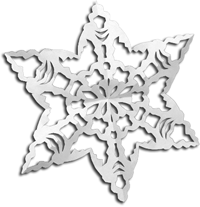
There are a lot of spiritual truths we can relate to snowflakes. Use this Christmas themed object lesson with your youth or children.

Materials
Thin paper like tissue paper works best, but you can do this activity with newsprint, Christmas wrapping paper, origami paper, a napkin, or even an ordinary sheet of paper.

Preparation
Give each youth an identical sheet of paper.

What to do
Explain to the youth that you’re going to play a game and explain the the rules of the game:

  1. “You must follow instructions as they are given. Can I have your commitment to follow instructions?”
  2. “Hold the sheet of paper in your hand.”
  3. “Close your eyes and keep them closed until you are told to open them.”
  4. “No talking at all is allowed.”
  5. “Fold the paper exactly in half.”
  6. “Tear off the bottom right hand corner.”
  7. “Fold the paper in half again.”
  8. “Tear off the top right hand corner.”
  9. “Tear off a piece of paper along the middle of the left side of the paper.”
  10. “Fold the paper in half again.”
  11. “Tear off a piece along the middle of the right side.”
  12. “Tear of the lower left hand corner.”
  13. “Open your eyes”
  14. “Unfold your paper.”
  15. “Compare your paper to the paper of the other youth next to you.”


Take it to the Next Level

“What happened?”

  • “Did everyone receive the same instructions?
  • “Did everyone follow the instructions?”
  • “Why did you get different results?”
  • “Who did it the correct way?”


“Why?”

  • “Did everyone understand the instructions?”
  • “What does it mean to “Fold the paper in half?”
  • “How many of you had the same understanding of this instruction?”
  • “What made the snowflakes different?”


Possible reasons things turned out different

  • Youth could fold from corner to corner or side to side – There is more that one way to do it.
  • Youth do not fold the paper exactly in half – They are not perfect.
  • Youth tore off different amounts – The instructions are not clear.
  • Youth tore off the paper at different places along the side – Made different choices.


“So What?”

  • Sometimes in life there is more than one way to do something. Different doesn’t always mean wrong. Of course if I said tear the right corner and you tore the left corner you would have done it wrong. Sometimes we need to evaluate whether something is Wrong or merely just different.
  • Each snowflake was different. No two are alike. The same is true with us.
  • Each snowflake has six sides. We are all the same in some ways, but we are also all different in other ways.
  • Sometimes we are unclear when communication with others.
  • We are not perfect, but we can all pursue excellence. Don’t worry about mistakes, but simply do your best.


“Now What?”
Interesting truths and facts about snowflakes and related lessons. You may wish to get some photos of real life snowflakes to show the youth group as you discuss truths about snowflakes: http://www.its.caltech.edu/~atomic/snowcrystals/

Each Snowflake is shaped by its journey

Snowflakes are not perfectly symmetrical since pollution, temperature, the humidity, the speed they fall, and even encounters with other snowflakes along the journey affect the way they grow. In our life journey, there are times for all of us when we are blown around, out of control, at the mercy of the conditions around us – obstacles, deaths, unpleasant circumstances, troubles, and pain. God uses all the things we encounter in life to mould us and shape us into something beautiful – even the seemingly bad things. “God causes everything to work together for the good of those who love God and are called according to his purpose for them.” [Romans 8:28] Even with the Christmas story, Mary finds out she is pregnant. Joseph is just as shocked to discover the news. They have to pay taxes. There is no room in the inn. Herod is intent on killing all newborns. But God used all these things to give us a Savior. In Jeremiah 1:5 and 29:11 we are told that God has plans for people before they are even born. God hasn’t forgotten you when bad things happen, he’s there right alongside you, and will use everything to make your life beautiful, even the dark specks of dirt. You are a combination of all of your life experiences. Remember this Christmas that everything that has happened to you along the way – Your education, your work, your skills, your talents, your choices, and even your mistakes – have all combined together to make you who you are today.

Each snowflake is Temporary

Though each snowflake is beautiful, they will all one day melt away, and will be gone, without leaving a trace of what they were behind. One cup of water can make 10 million snowflakes and combined together with others they can blanket the countryside in a beautiful white blanket of pristine white. But the very next day things could be a muddy mess. Yet, even from the muddy mess they may provide the water of life to others. This Christmas remember that life is short. Make the most of the opportunities to bring life to others.

Each snowflake is unique

No two snowflakes are alike. They all have six sides, but those six sides create something of unique beauty. They float up and drop down in the air currents until they become too heavy and finally fall to the ground. In the same way, there’s no one else in the world like you. There has never been anyone just like you. There will never be anyone else like you. God created you and formed you according to his perfect plan and purpose for your life. I will praise thee; for I am fearfully and wonderfully made. (Psalms 139:14) “Before I formed you in the womb I knew you, and before you were born I consecrated you; I appointed you a prophet to the nations.” (Jeremiah 1:5) God has chosen to lovingly make you exactly the way you are for a purpose that only you can fulfill. Then journey might seem unplanned and even chaotic, ups and downs, but when you finally reaches God chosen destination you will reflect God’s design for your life. You were fearfully and wonderfully made by God, for his purpose!

Each snowflake begins with Dirt

Every snowflake begins with a dirty speck of dust. As it collects moisture from the air, the speck of dust is covered and concealed. At it’s core it is still dirty but it has become something beautiful. With a little snow they whole landscape changes. Everything is white and pristine. All the dirt is covered and the world is transformed into something delightful. But under that snow, all the trash, and imperfections are still there and in a few hours of harsh sunlight, they will be revealed again. Scripture tells us that man was also formed from the dust. But God has made us into something beautiful. This Christmas season remember that, regardless of what lies in your past, through Christ you were made beautiful by God. When God cleanses us, he washes us whiter than snow. He doesn’t just cover up our dirty heart – he gives us a new heart. Our “dirty heart” of stone is replaced with a heart of new life in him, pure and blameless. “Come now, and let us reason together, saith the LORD: though your sins be as scarlet, they shall be as white as snow…” (Isaiah 1:18) This Christmas, let us pray like David prayed in Psalm 51:7, “…wash me, and I shall be whiter than snow.

MORE IDEAS? See “Creative Object Lessons”
200 page e-book that explains everything you need to know when planning your very own object lessons. It contains 90 fully developed object lesson ideas and another 200 object lesson starter ideas based on Biblical idioms and Names / Descriptions of God.
Learn More…

Get Creative Youth Ideas: "Christmas Collection" ebook Christmas Collection
Games and Activities helping youth discover the Reason for the Season.

Get more than 200 creative ideas for planning a Youth Christmas celebration or Christmas Party party. You can immediately download my best Christmas Icebreakers, games, illustrations, Christmas activity ideas AND MUCH MORE in a useful ebook!

=> Tell me more about the Christmas Collection

Shining for Jesus This Christmas

glowing_star.jpgLight is intrinsically linked with Christmas. The coming of the light was foretold in Prophecy and Christ came as the light of the world. The wise men followed the light of a star to Jesus. Jesus came as the light of men.

  • “the people living in darkness have seen a great light; on those living in the land of the shadow of death a light has dawned.”(Matthew 4:16)(Isaiah 9:2)
  • “In Him was life, and that life was the light of men” (John 1:4).
  • “You are the light of the world. A city on a hill cannot be hidden.
  • “This is the verdict: Light has come into the world, but men loved darkness instead of light because their deeds were evil” (John 3:19).

During the Christmas season we need to be reminded: “You are the light of the world. A city on a hill cannot be hidden.” (Matthew 5:14) “Let your light shine before men, that they may see your good deeds and praise your Father in heaven” (Matthew 5:16)

Description
But one look at ourselves and we realize that all to often we are not very good lights. How can we be better lights? Use this Christmas object lesson to help youth find out the secret of how they can be lights to the world this Christmas!

Materials needed

  • A meeting room that can be darkened.
  • Glow in the Dark plastic stars (Easily found at home decorating stores) If you want the youth to “take the lesson home” buy enough stars so that every youth or child can have one to take back with them.
  • A bag, wrapper or container that is completely light proof and allows in absolutely no light in which you can place one of the stars. (If nothing else you can wrap it in a couple layers of foil and roll up the edges.)


Preparation
Put on star away so that it receives absolutely NO LIGHT for a day. Place another star in direct light for the day and make sure it gets plenty of light up until the meeting.

What to Do

  1. Just before the meeting starts, take the star that has received light the entire day and place it someplace in the meeting room where it will get plenty of bright, direct light yet can easily be seen by the youth after the lights are turned off.
  2. You might was to begin by singing some of the Christmas hymns or carols that mention light. (We Three Kings, Angels From The Realm Of Glory, Do You Hear What I Hear, Go, Tell It On The Mountain, Hark! The Herald Angels Sing, O Holy Night, O Little Town of Bethlehem, Silent Night, etc.
  3. Discuss light and how Jesus is the light of the world and how we are also supposed to let our lights shine before men.
  4. Ask youth for examples of how we let our light shine.
  5. Ask for advice on how we can shine brighter for Jesus this Christmas.
  6. Ask youth if they would like to know the #1 secret to letting your light shine?
  7. When they all say yes, have someone shut out the lights.
  8. Point to the glowing star and state that like Jesus, we are to be lights in the darkness.
  9. Then while the lights are still off, take out the star that has been kept out of the light all day and tell the youth you are placing another star next to the one that is already shining. you can also take both stars and hold them up together. If the room is dark enough, most will not be able to see the new star at all.
  10. As the lights are turned on, youth will see you holding two stars.
  11. Explain the secret: One had been in the light all day and another had been in darkness. The biggest secret to shining out for Christ this Christmas is to spend plenty of time with the Jesus, plenty of time in the light. By spending time in the presence of Jesus, we will be able to make a difference in the darkness.
  12. End the meeting by giving each youth a glow in the dark star to take home as a reminder to spend time each day in the presence of Jesus so that they can shine forth for Christ this Christmas!

MORE IDEAS? See “Creative Object Lessons”
200 page e-book that explains everything you need to know when planning your very own object lessons. It contains 90 fully developed object lesson ideas and another 200 object lesson starter ideas based on Biblical idioms and Names / Descriptions of God.
Learn More…
Get Creative Youth Ideas: "Christmas Collection" ebook Christmas Collection
Games and Activities helping youth discover the Reason for the Season.

Get more than 200 creative ideas for planning a Youth Christmas celebration or Christmas Party party. You can immediately download my best Christmas Icebreakers, games, illustrations, Christmas activity ideas AND MUCH MORE in a useful ebook!

=> Tell me more about the Christmas Collection

Take It Away

Description
This Object Lesson for children and youth uses static electricity as a metaphor for Christ’s work of Salvation in the lives of Believers. Christ not only takes our sins upon himself, but also wants us to cast all our burdens upon him.

Resources
Salt, Pepper, and a nail + cloth. (See note below for variations)

NOTE: This object lesson uses static electricity and can be greatly affected by the humidity and temperature. Depending on how dry the air is, you may be able to rub a key or spoon on your clothing, rub a glass rod with silk, use a comb on your hair, or rub a piece of rubber like an inflated balloon on your hair. Each of these creates a static charge under the right conditions. HINT: Don’t use clothing or cloths that have been treated with a fabric softener as these help prevent the buildup of static electricity.

What to do

  1. Pour a small mound of pure white salt representing a pure life into the center of a dark colored plate.
  2. Sprinkle a dash of salt on top of the salt, representing sin.
  3. Get a large iron nail and rub it with a piece of cloth to create static electricity.
  4. When you place the statically charged object near the pepper. When you do this the pepper will be attracted to it and can be lifted away.
  5. Practice this a couple of times. If you put too much pepper there may not be enough static charge to attract all the pepper.

Take It to the Next Level

  • The significance of using a nail is obvious. Christ’s nail scarred sacrifice lifted away our sin and attached it to himself (1 Peter 2:24). Christ is also the key to eternal life. Our sin was taken off us and placed on Him that we might become pure and blameless before God.
  • Another option is to have the pepper represent hurts, bad habits, hurtful words or other things in our lives that we want God to remove. I Peter 5:7 
…casting all your care upon Him, for He cares for you. Cast your burden on the Lord Psalms 55:22.

MORE IDEAS? See “Creative Object Lessons”
200 page e-book that explains everything you need to know when planning your very own object lessons. It contains 90 fully developed object lesson ideas and another 200 object lesson starter ideas based on Biblical idioms and Names / Descriptions of God.
Learn More…

An Illustration of Eternity

Here’s an interesting Object Lesson for children, youth, and adults from Francis Chan illustrating the difference between living for the things of this world and living for eternity. The few short years you have on earth determine how you will live for eternity. What are you living for?

MORE IDEAS? See “Creative Object Lessons”
200 page e-book that explains everything you need to know when planning your very own object lessons. It contains 90 fully developed object lesson ideas and another 200 object lesson starter ideas based on Biblical idioms and Names / Descriptions of God.
Learn More…

Crushed – Isaiah 53:5

Description
Use this Easter Object Lesson to remind youth that Christ was crushed for our sins so that we might be made whole and begin a new life with him.

Resources

  • Several hollowed out Eggs

Click here to learn how to blow out an egg without breaking it.

What to do

    • Give each youth a clean, hollowed out, un-broken egg
    • Ask the youth to close their eyes, and imagine this white egg to represent the perfect and Holy Jesus.

Give youth some paints, crayons, markers, glue, glitter, etc to decorate their eggs with something symbolic of Christ.

  • Then ask the youth to hold the eggs in their hands and close their eyes.
  • Imagine this egg as the pure Holy Christ.
  • Then ask the youth to SQUEEZE the egg as hard as they can, breaking it into lots of pieces.
  • As they hold the shattered eggs in their hand, ask them to fix it back to the way it was before.
  • Finally, Ask them what emotions and thoughts this activity stirs in their hearts and minds.

Take it to the Next Level

  • Were you hesitant to crush the egg? Did you find it difficult to crush this symbol of God with your hands? Why or why not?
  • In what ways does the crushing of this egg represent our relationship with God?
  • In what ways do some of our actions destroy our relationship with God?
  • How did you feel when you tried to restore your egg back to its original state?
  • Think about a time in your life when you felt like this crushed egg? What happened?
  • Think about a time when you did something in a relationship and wished you could have set things back to the way they were before. What happened?
  • Why is it so difficult to repair damaged relationships?
  • Scripture says it is impossible for us to restore our relationship with God. Why?
  • What lessons does this simple object lesson hold for us when it comes to relationships in our own lives?
  • In what ways do people crush and damage relationships?
  • What can be done to put things back to the way they were?

Closing out the Lesson
It is impossible to completely restore the egg that has been crushed. Cracks and scars will remain. Forgiveness is often difficult, and even when we do forgive someone, it is not always easy to put the pieces of our broken lives back together again. Consequences may be much longer lasting. There are people who have suffered physical, sexual and emotional abuse and the results can last for a lifetime. Sometimes we wonder, “How can I ever forgive this person for what s/he did to me?” And we go on living life as shattered souls, trying to piece things back together.

But this is where the story of the Cross and Easter come into play. The sin in our lives destroys the perfect relationship we had with God. Nothing we can do can put it back together. But Jesus was crushed on the cross for our sin. (Isaiah 53:5) He put himself in our place and was crushed so that we might be whole again. He came not to put our broken lives back together but to give us a new life in Christ – To start a new relationship with him. “If we confess our sins, He is faithful and just to forgive our sins and purify us from all unrighteousness.” (1 John 1:9) “I, even I, am he who blots out your transgressions, for my own sake, and remembers your sins no more.” (Isaiah 43:25) Everything is new. A new beginning comes to our lives.

And in the same way God forgives us, we need to forgive others. “Be kind and compassionate to one another, forgiving each other, just as in Christ, God forgave you.” (Ephesians 4:32)

Give Each youth a new egg and let them decorate it with something representative of a new beginning in Christ. Today can be a new beginning for each of us if we trust the work of Christ on the Cross and believe in the resurrection and new life he brought to us on Easter Morning. Ask youth to pray a prayer of forgiveness and also to commit to a new beginning with those they have wronged or that have wronged them. Ask them to begin anew in their relationship with God. Maybe they can give this second egg to someone as an offering and reminder of forgiveness or simply keep it as a reminder of God’s forgiveness.

God wants to give us a new beginning in our relationship with Him as well in our relationship with others. Make this Easter a time of new life, of new beginnings in your life. Give God the broken pieces of your life and of relationships and trust him for a new sunrise tomorrow, for a resurrection morning filled with new life in Him!

MORE IDEAS? See “Creative Object Lessons”
200 page e-book that explains everything you need to know when planning your very own object lessons. It contains 90 fully developed object lesson ideas and another 200 object lesson starter ideas based on Biblical idioms and Names / Descriptions of God.
Learn More…

Get Creative Youth Ideas: "Easter Collection" ebook Easter Collection
Games and Activities in celebration of Easter.

Get more than 80 creative ideas for planning a Youth Easter celebration or Easter Party. You can immediately download my best Easter Icebreakers, games, illustrations, Easter activity ideas AND MUCH MORE in a useful ebook!

=> Tell me more about the Easter Collection

How to Make a Piñata (Pinata)

Description of this Easter Object Lesson
While much of the religious symbolism has been forgotten, the Piñata is a great object lesson for youth or as a Children’s Sermon at Easter, Lent, or simply as a lesson on the blessings of God.

The History of Piñatas

Piñatas are favorites at Mexican fiestas (parties/ celebrations) although their true origin was likely in China. According to tradition, they used something similar to modern pinatas in China to celebrate the New Year and possibly for other occasions as well. They were often made in the shape of livestock (buffalo, oxen, or cows) and filled with seeds that spilled onto the ground when the piñatas were broken. Broken pieces of the pinata were then burned and villagers took some of the ashes home with them for good luck in the coming year.

According to historians, it was Marco Polo who brought back the Piñata to Europe and introduced it first to the Italians. The first European pinatas were were clay pots unlike the paper mache pinatas that we see today. In fact, the Italian word “pignatta” means “fragile pot” and the original piñatas resembled thin clay containers for carrying water.

In Europe, the tradition was adapted by the church sometime during the 14th century and was used as an object lesson during the celebration of Lent to teach spiritual truths. The first Sunday during Lent became known as “Pinata Sunday”. On this day, a pinata shaped like a star with seven points was used – each point supposedly representing one of the seven deadly sins; lust, gluttony, greed, sloth, envy, anger and pride. The blindfolded participant represented the conqueror of evil, or faith, which must be blind. People would gather around the player and spin him to disorient him. Sometimes they would spin the person around thirty three times in memory of the years Christ lived on earth and resisted temptation. The other participants would cry out directions (either to help or mislead) indicating to the player to hit higher, more to the right, straight ahead, etc. When someone broke through one of the seven points with the stick (which represented virtue, righteousness or faith) it brought to mind the symbolism of breaking the bad habits of the seven deadly sins and our personal triumph over temptation, resulting in a delightful shower of blessings from God. The pinatas were filled with small toys, fruits, seeds, and candy and said to represent hope – since it was always hung above the heads of the participants as a reminder that one had to look toward heaven in expectation of blessing and divine strength to triumph over temptation. The moral of the piñata: all are justified through faith and welcome to the blessings of God. This seven pointed star as a version of the pinata is still very common today though the symbolism has been forgotten by most.

When the custom spread to Spain, the first Sunday in Lent became a fiesta called the “Dance of the Piñata” and they used a clay container called “la olla”, the Spanish word for “pot”. When the tradition first started, the pot was undecorated, later, ribbons, tinsel and fringed paper were added and wrapped around the pot.

Tradition says it was the Spanish that brought the pinata to Mexico where a very similar tradition already existed. Supposedly the Aztec and Mayan Indians of Mexico filled clay pots with nuts, berries, fancy beads, and painted stones as a birthday celebration offering to their god of war – Huitzilopochtli. Priests then hung the filled pots on a pole near the god and during the birthday celebration, the pots adorned with colorful feathers would be hit with decorated sticks – breaking the pots and spilling the offerings at the feet of their god, thus insuring a prosperous year. Since the Spanish tradition was similar to the one that already existed in Mexico, Catholic priests introduced their version as a replacement to the worship of the local pagan gods and to instruct them about the one true God.

Pinatas today

While most common in Mexico, pinatas are enjoyed around the world where they are a great youth party activity for quite a number of celebrations and Holidays including birthdays, Christmas, Thanksgiving, Halloween and even New Year’s Eve. Today, the piñata has lost almost all of its religious symbolism and is simply a popular party game. Yet in Mexico they are very popular during “Las Posadas” (Christmas processions) and for birthday parties. Around Christmas, wrapped candies, peanuts, guavas, oranges, jicamas(a sweet root vegetable), sugar cane, and tejocotes (a kind of crab apple) fill the piñatas and some is also set aside for any child that ends up without a
treat when the pinata is broken.

How to Make your own Pinata

Making a piñata for a youth party or as a craft project for your kids is a great way to exercise their imagination as well as provide an outlet for excited energy. There’s always an uproar of excitement when youth break open these festive vessels to reveal an abundance of gifts and candy inside. Depending on what’s inside they are enjoyed by children, youth, and even adults.

What follows are some instructions on how to make piñata, a few ideas on how to decorate your completed pinata, instructions for the standard game with pinatas, and some possible applications for Bible Study lessons:

A piñata is basically a very fragile hollow container made of paper mache and decorated with bright crepe paper or painted. To make your own pinata you will need some basic supplies listed below and of course a little imagination doesn’t hurt either.

Materials Needed to make your Party Pinata

  • Paper Mache (See Recipe below)
  • Scissors
  • Candy and small toys (For adults you can substitute small useful items, gift cards, and a variety of other items
  • Paints and/or Colored Crepe Paper. Permanent Markers are also useful for details.
  • Balloons
  • Tape (masking tape)
  • String for hanging up your finished masterpiece
  • Scissors (optional)

Paper Mache Recipe for Making Your piñata(No Cooking Required)
There are many ways to make paper mache but the simplest is the traditional “no cooking needed” paper mache recipe. You will need the following:

  • Water
  • Flour
  • Large Bowl
  • Newspaper – because it is common but you can use any type of paper such as plain unlined paper
  • Wax paper to line your work area as paper mache can be messy


Directions

  1. Be sure and line your work area with the wax paper or plastic sheeting to make the area easy to clean.
  2. The flour and water are to be combined to make a paste. You can use a mix of about 2 and a half cups of water to 2 cups of flour. Stir the flour and water into the bowl and mix until it is smooth. (You can alse use 3/4 cup white glue to 1/4 cup water or pre-made liquid starch found at your supermarket)
  3. You will then need to tear your newspaper or paper into strips about six to eight inches long and an inch to two inches wide. Don’t try to be neat and cut the paper with scissors; the torn edges will adhere more closely and give a smoother overall surface to the finished pinata.
  4. Soak your strips in the water and flour mixture. The paper should be thoroughly saturated with the paste. (Note: Heavier paper will require a longer period in the mixture.)
  5. When your paper mache is ready you should blow up your balloon and tie it off securely. The balloon will be your cavity to fill with candy. (Note: You can use more than one balloon of various sizes and shapes to create more intricate designs. Cardboard tubes from toilet paper or paper towels are also useful to add arms and legs to your basic balloon body later. You can also tie loops of string on the balloons to shape them.
  6. Take the paper mache strips and place those evenly over the balloon in opposite directions from each other when possible. Use two layers of paper mache to completely cover the balloon except for a small hole at what will be the top of the container and through which you will remove the balloon after you pop it and also to insert the contents. (Note: Be sure to Place the second layer of newspaper diagonally in the opposite direction of the first layer to make the pinata stronger. Depending on how strong you want the piñata, let it dry then add a third layer. For small children, two layers will be
    enough.
  7. You might also want to include one or two loops of string around the balloon and between layers of paper mache with the ends loose at the top to make hanging it up easier. Alternatively, After the pinata dries, you can make 3 or 4 small holes around the opening of the piñata and lace it up with string to hang the pinata
  8. The piñata will require at least 48 hours of drying time.
  9. When it is dried pop the balloon through the
    small hole at the top and take the balloon out.
  10. Extra cardboard, Styrofoam, and paper rolls can be used to add arms legs and other features to the basic body.
  11. Decorate by gluing small strips of crepe paper that has had the ends feathered with scissors or by painting.
  12. Hang colored crepe paper streamers from the bottom of the pinata for the finishing touch.
  13. Fill with candy and toys or other party favors and gifts. Tie the ends of the exposed string at the top together firmly making a short string handle, and suspend the piñata with another length of longer string or a rope attached to the shorter handle.


Here are some simple ideas for Pinata Designs

    • Teddy Bear Pinata
      To make a teddy bear, follow the directions above and cut out two ears from cardboard. Paint them to the perfect teddy bear color and attach them to the balloon with a little paper mache or glue. Add facial details most easily by cutting out the face from heavy construction paper or painting on the face. You can also draw the face using permanent markers. The finished Pinata can be painted to traditional teddy Bear colors or can be as fantastically colored as imagination desires. With a little creativity you can create a Panda with this design as well.


  • Flower Pinata
    Make your basic piñata and then complete it by painting or covering with tissue or crepe paper. Then cut large craft paper petals to glue around the outside of your candy filled container. The beauty of this is the craft paper or construction paper petals are already brightly colored. Allow the glue to dry thoroughly on the paper petals, then hang, and enjoy!


Tips

  • A piñata is more appropriate for outdoor games or where there is ample space. You can also use a garage, auditorium or some other indoor facility of the right size.
  • When gluing the newspaper strips to the balloon it can be difficult to hold the balloon in position. To make it easier, rest the balloon in a bowl that is covered with plastic wrap.
  • Make the surface of the newspaper as even as possible so the pinata is easier to decorate and looks smoother. You will use crepe paper later to add texture and color.
  • Add the final layer using torn strips of white computer paper or paper towels to allow for easier painting and more vivid colors in decorations.
  • Use individually wrapped candy to fill the pinata. Bulk candy may be cheaper but when the pinata bursts all the candy will fall onto the floor. Other contents can be added suited to a specific theme or holiday as well. Add gospel tracks to the mix for an evangelistic event. Confetti is a little messy but can also add some fun.
  • Foam board, cardboard, paper roll tubes, and bits of Styrofoam can be used to add features to the basic balloon.
  • Be sure to leave yourself plenty of time in order for all of the layers of the pinata to dry. Usually it requires several days to make a pinata, so plan early in advance of your event.


With a little bit of time, some imagination and perhaps some help from the youth you can have a beautiful and specially made party game filled with fun and surprises. Hang this specially crafted party favor up in time for the party and watch the youth’s eyes light up and the laughter that ensues. Hint: if you have made your festive vessel
especially durable it is possible the younger children may require a little assistance to open it up, but don’t worry they won’t mind too much. Older kids and adults will have less trouble breaking open their piñata.

How to Play the Piñata Game

  1. Find a place to hang the piñata. You can easily hang it from a tree branch or a basketball hoop by simply tossing the string over the branch. After dangling the piñata with the string, lift it into the air by pulling the string tight and holding it in position. The pinata can be lowered or raised by pulling on the string.
  2. The youth will need a blindfold and a stick. A broom handle works great, but a walking cane or bamboo pole can also be used for youth to swing at the pinata.
  3. Organize the youth in a line with the youngest or the shortest one a the beginning of the line all the way to the tallest at the back. You can also put the girls first as well.
  4. Usually participants are blindfolded, spun around a couple of times and pointed in the general direction of the pinata. They are then handed the stick to swing at the pinata. They are usually given a limited number of swings, usually three swings per turn.
  5. BE VERY SAFETY conscious and keep other youth a safe distance from the pinata and the swinging stick. This is meant for the safety of the rest of the youth so that they do not get hit by the blindfolded participant.
  6. When the pinata breaks, the youth swinging the stick must place the stick on the ground and only when the stick is on the ground can everyone run in and get the goodies.

Taking it to the Next Level
In addition to the traditional symbolism associated with the pinata at Lent and Christmas. A pinata (piñata) could also be used to illustrate a variety of lessons concerning the blessings of God and of the free gift of Salvation. Here are a few simple truths that might apply depending on your theological perspective:

  1. We don’t always know what blessings we are going to receive, but we do know that they are chosen by God and will be something fantastic.
  2. They are a gift prepared by God in advance. We only need to receive them.
  3. We don’t know when they will be released. Sometimes we may work for a long time before they are
    released.
  4. Sometimes it is something that someone else does that releases the blessings and they are shared with us.
  5. When God releases Blessings in our lives we need to share them with those around us.

MORE IDEAS? See “Creative Object Lessons”
200 page e-book that explains everything you need to know when planning your very own object lessons. It contains 90 fully developed object lesson ideas and another 200 object lesson starter ideas based on Biblical idioms and Names / Descriptions of God.
Learn More…

Managing Priorities

A while back I was reading about an expert on the subject of time management. One day this expert was speaking to a group of business students and, to drive home a point, he used an illustration I’m sure those students will never forget:

As this man stood in front of the group of high-powered overachievers he said, “Okay, time for a quiz.” Then he pulled out a one-gallon, wide-mouthed mason jar and set it on a table in front of him. Next he produced about a dozen fist-sized rocks and carefully placed them, one at a time, into the jar. When the jar was filled to the top and no more rocks would fit inside, he asked, “Is this jar full?” Everyone in the class said, “Yes.” Then he said, “Really?”

He reached under the table and pulled out a bucket of gravel. Then he dumped some gravel in and shook the jar causing pieces of gravel to work themselves down into the spaces between the big rocks. Then he smiled and asked the group once more, “Is the jar full?” By this time the class was onto him. “Probably not,” one of them answered.

“Good!” he replied. And he reached under the table and brought out a bucket of sand. He started dumping the sand in and it went into all the spaces left between the rocks and the gravel. Once more he asked the question, “Is this jar full?” “No!” the class shouted.

Once again he said, “Good!” Then he grabbed a pitcher of water and began to pour it in until the jar was filled to the brim. Then he looked up at the class and asked, “What is the point of
this illustration?”

One eager beaver raised his hand and said, “The point is, no matter how full your schedule is, if you try really hard, you can always fit some more things into it!”

“No,” the speaker replied, “that’s not the point. The truth this illustration teaches us is: If you don’t put the big rocks in first, you’ll never get them in at all.”

What are the big rocks in your life? A project that YOU want to accomplish? Time with your loved ones? Your faith, your education, your finances? A cause? Teaching or mentoring others? Remember to put these BIG ROCKS in first or you’ll never get them in at all.

MORE IDEAS? See “Creative Object Lessons”
200 page e-book that explains everything you need to know when planning your very own object lessons. It contains 90 fully developed object lesson ideas and another 200 object lesson starter ideas based on Biblical idioms and Names / Descriptions of God.
Learn More…