
Game Description
Use your senses to identify common foods and snacks.
Game Materials
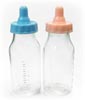
Jars of Baby food, Dark Construction Paper, adhesive Tape, Disposable Spoons (1 per participant per jar), Paper, Pens
WARNING
Be sure to check participants for any food allergies before doing this game.
Game Preparation
- Purchase 8-10 jars of baby food, each with a different flavor.
- Tape a piece of dark construction paper over the label of the jar so that the labels cannot be seen.
- Number the jars.
- Give each participant a piece of paper and pen and a spoon for each jar.
Game Play: Taste
- Each participant will do a taste test from each baby food jar. For each jar of baby food, participants should use a clean spoon. They are only allowed a single taste from each jar.
- Participants take a small spoonful from each jar as a sample and try to identify the food.
- They must record their answers on paper that has been numbered to correspond with the numbers on the jars.
- After everyone has tasted the food from the jars and recorded their answers, reveal each jar’s label.
- The participant who correctly guessing the contens of the greatest number of jars is the winner.
Game Variation
- Taste and Touch – use small finger foods (i.e. olives, cooked (cold) spaghetti, piece of candy, cracker, barbecue potato chip, cashew nuts, breakfast cereals, croutons, grapes and other fruits, raisins, dates, dried fruits, and other small snacks) Blindfold all the participants so that they cannot see before passing around the finger foods. Answers are wispered to the leaders.

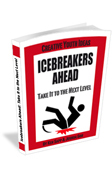 Icebreakers Ahead: Take It To the Next Level
This 170 page resource not only provides 52 of the world’s most popular group icebreaker activities and games, but also includes lesson ideas and discussion questions to smoothly transition into conversations about the issues common to most groups.
Click here to find out how to get your hands on this incredible resource!
 A Mentor is one who holds up a Mirror for Reflection. What is reflected is the life of the protégé, not the brilliance of the mentor. There is no greater mistake than to mold others into one’s own image. The mentor’s job is not to shape, but to facilitate the discovery process. Wisdom is not imposed, it is portrayed. Character is not taught, it is provoked and inspired. He doesn’t teach a person skills, but shows a person a life. It’s a misconception that a mentor’s task is to do something for another person by teaching, correcting, or otherwise giving something the mentor possesses, something the protégé lacks. That’s Coaching. Mentoring is more “how can I help you” rather than “what should I teach you.” Its not something the mentor does, but helping the protégé to do something. Successful mentoring is not determined by what a mentor does, but by the responsive of the protégé to the image he sees as the mentor holds the protégé’s life up for personal reflection. Responsibility and initiative for growth lies in the reponsiveness of the protégé, not the mentor’s.
 Game Description
 “If I could see further than others, it was because I stood on the shoulders of giants.”
 The mentor carves out and helps to create a space where learning can occur. It has boundaries of confidentiality, structure, and guidance, but is open. It is a safe place where both can be vulnerable with their questions, struggles, emotions and doubts. There is space for ideas, curiosity, wonder, and joy. It is a space in which the mundane, the ordinary can be a container of grace. It is a space in which the mentor is given increasing permission to ask the tough questions that will penetrate the masks most of us wear. It is a space where the protégé has no fear to confess failings and progress, to entrust the secrets of his heart, and reveal all his plans.
 British Left Waffles on Falkland Islands